You Dont Know What Love Is Trombone
In that location are 3 "non-negotiables" in trombone playing: 1) tone, 2) intonation, and iii) time/rhythm. If a player is in practiced shape in all iii of these areas, chances of success in well-nigh any functioning, audience, or competition are loftier.
Tone, of class, is the first of these priorities. Without proficient tone, nothing else yous can practise actually counts. Below are some suggestions for improving tone and attending to this highest of priorities.
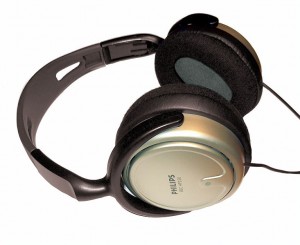 1) Platonic Tone—Be sure to have a articulate platonic sound in your head. Listen to great recordings and live performances. If you have no existent idea how you would like to audio, your chances of ending up with neat tone are pretty depression. For recordings, I recommend Joseph Alessi. Flood your brain with practiced sound!
2) Air—Feed the sound with lots of air. Air is the equivalent of bowing technique for strings. Relax, have in a little more air than you think y'all need, and exhale that air freely every bit yous play (don't try to meter the air with your lips). Mostly speaking, most people simply don't use enough air to give their tone a total, robust quality.
3) Small or Nasal Tone—The most mutual tone problem for first and intermediate trombonists is a small, nasal sound. To motion toward a thicker, more than robust tone, relax in general, employ less "clasp" in your lips, and endeavor opening upwardly the aperture (the hole in the embouchure) a little more. The problem of squeezing the embouchure likewise much is mutual fifty-fifty in college players. If yous've ever heard a tuba player play a few notes on trombone, for example, the sound is beautiful! This is because they have a more relaxed approach to embouchure and they're in the habit of using more air than trombonists generally employ. In fact, I ofttimes recommend that my college students who are trying to get a bigger, thicker sound take a semester of tuba lessons. It really helps! Permit your chops, particularly the middle of your lips, be as "floppy" and free to vibrate every bit possible.
four) Fuzzy or Airy Tone—The problem of fuzzy or airy tone is sometimes the result of not warming upwards or of bones fatigue at the end of a lot of playing. However, if you notice that you lot withal take fuzz in your sound fifty-fifty when you lot're warmed up and not fatigued, I recommend mouthpiece buzzing or "free" buzzing (buzzing without the mouthpiece). Orthodontic braces often cause extreme airy sound, and I heartily recommend buzzing to ameliorate tone problems associated with braces. Excessively puffing your cheeks and/or bunching up your chin tin can also pb to airy tone.
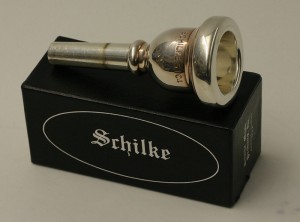 five) Mouthpiece Pressure & Bending—Many of us utilise too much mouthpiece force per unit area, which tin stifle tone. Every trombonist gets a little chip of a band around their embouchure when they play; however, if you lot discover a deep red band after only a few minutes of playing, y'all're probably using besides much pressure. All you need is enough to brand a seal. Using too much pressure keeps vibration from freely occurring, stifles the sound, and often causes endurance issues. As well check the mouthpiece bending or pressure level on the tiptop vs. the lesser lip. Experiment with this superlative vs. bottom lip pressure a little, adjusting the overall bending of the horn, and come across what happens. With some players, getting the best angle and balance of their instrument tin can take a surprising effect on overall tone.
6) Tension—Too much full general tension can affect tone very negatively. This is one of the biggest problems in loud playing for many trombonists—we go excited and intense, and we permit that lead to physical tension, which leads to a "blatty" loud audio. It's not necessarily that y'all're playing too loud; it's that you're playing with the wrong kind of loud sound. Meet how relaxed you can be in full general when yous practice and perform. More than than probable, the more than relaxed you lot become, the thicker and freer your sound will be. When you're practicing, if your sound is not good on a passage, relax, take a big breath, and try it once again!
7) Forget the Soft Palate—Forget trying to push button the soft palate upwards. You've probably been told by various people to push up your soft palate like you're yawning or fogging up a mirror. It'southward an old misconception. Forget it! It causes a weird kind of unnecessary tension in your oral cavity and sometimes leads to a tight, compressed, nasal audio. Instead, relax your rima oris and throat without trying to push anything or manipulate anything. Just relax and blow. Things volition gently expand on their own and your tone will be much improve. Over the years, I have had several college students who were trying so hard to push button upwardly their soft palate that it was causing this problem. When they learned to relax their mouth and pharynx, their sound finally improved.
 8) Priority—As I mentioned before, tone has to be a big priority in your playing. It's at the very top of the list! If you're practicing and y'all get the right notes and rhythms on a passage but the tone is bad, become back and get it with proficient tone. Keep paying attention to your sound. Information technology doesn't count unless information technology's with expert tone!
Source: https://kimballtrombone.com/2009/06/05/improving-tone-on-trombone/

Publicar un comentario for "You Dont Know What Love Is Trombone"