Easy Trail to See Wildflowers Near Mt Rainier
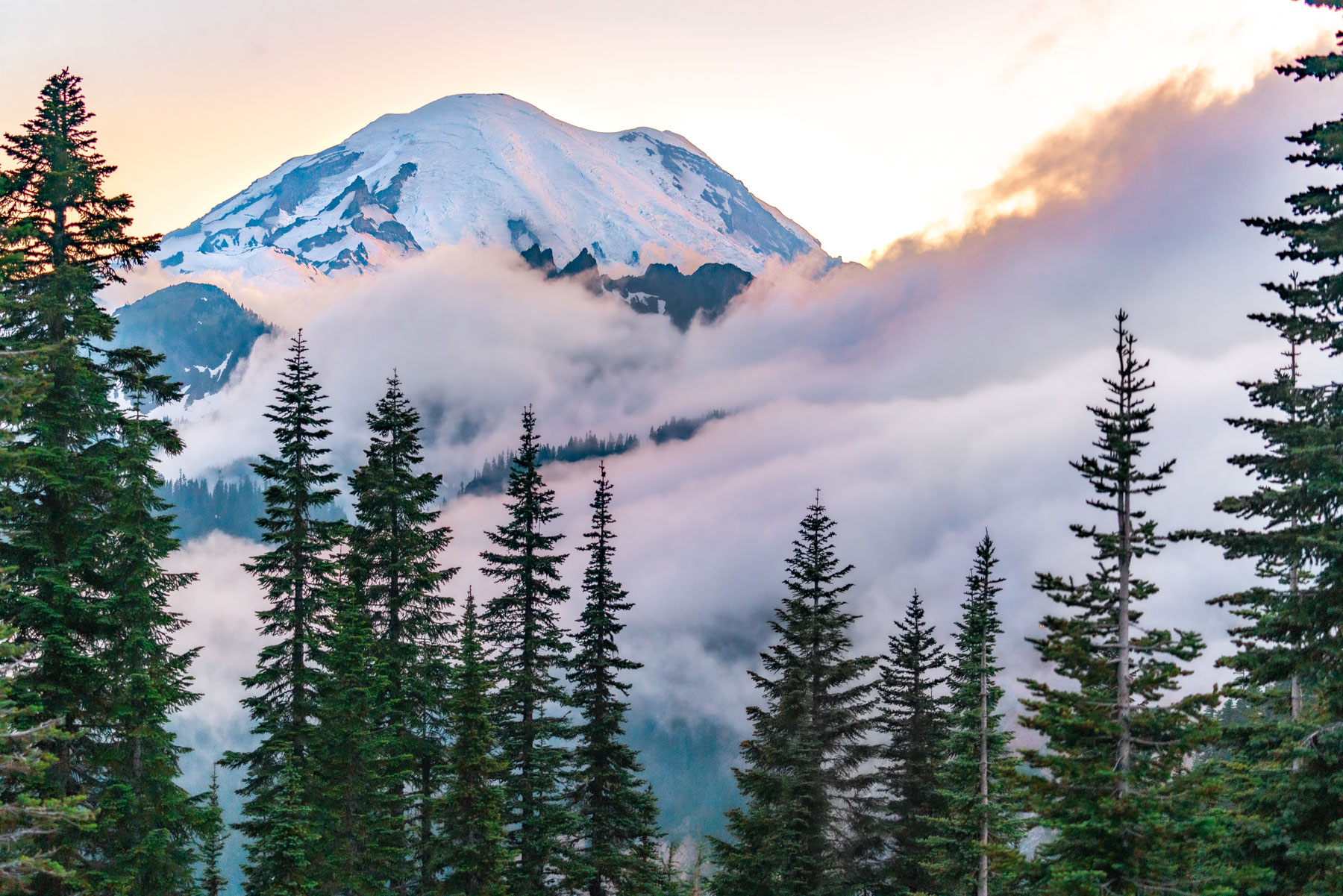
America has some jaw-dropping national parks but for me, nothing tops Mt. Rainier National Park. After 40+ visits, I can tell you with sincerity that the best hikes at Mt. Rainier National Park parallel trails I've hiked in Switzerland — the landscape is breathtaking!
In the past 5 years, I've hiked 90% of the trails at Mt. Rainier National Park during all four seasons and have become the go-to source for friends and family interested in visiting the park.
Without further ado, I'd like to share my experience with the BEST hikes at Mt. Rainier National Park. I hope you enjoy!
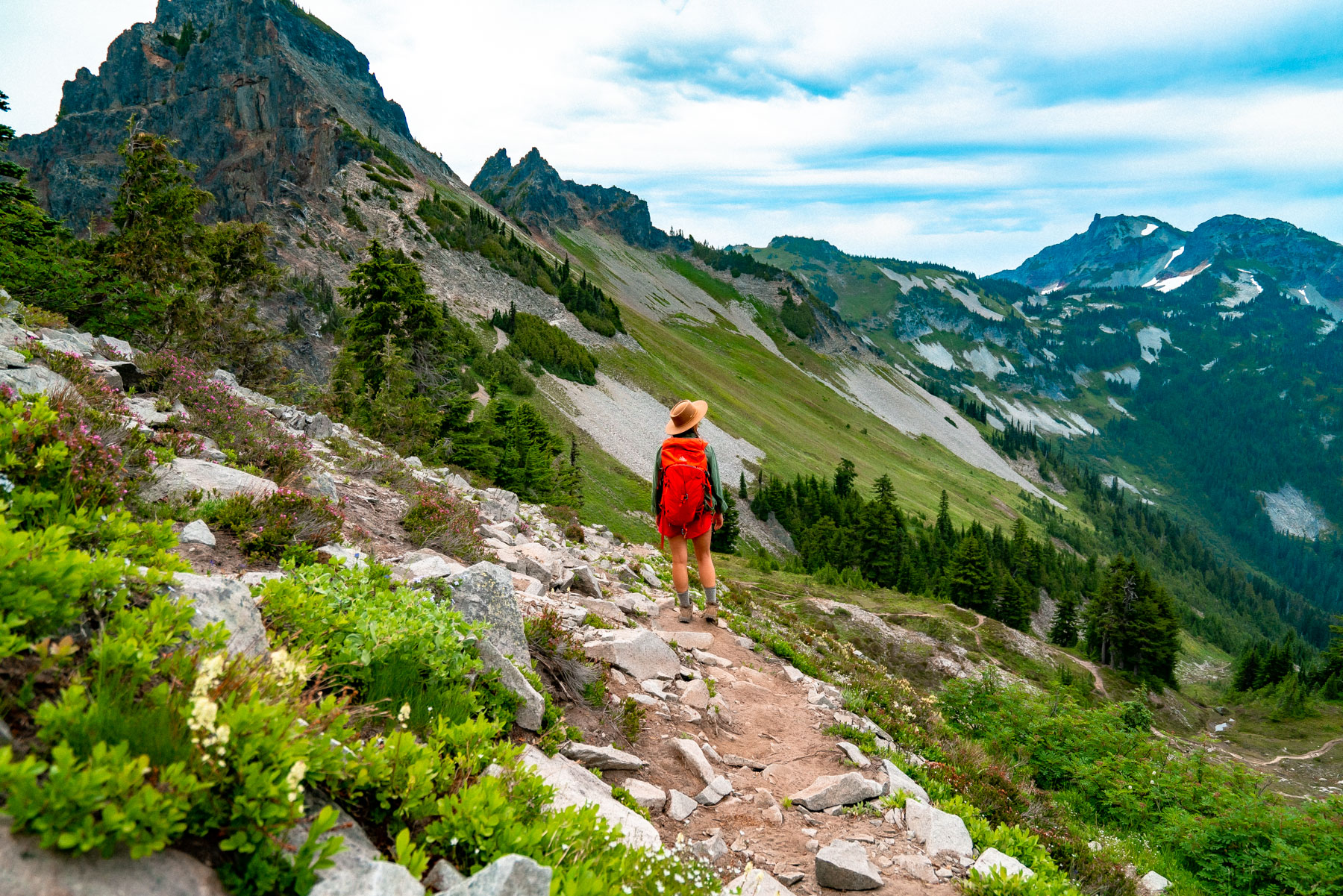
P.S. So many of you have asked about my hat (thank you!). It was a birthday gift from my husband, you can find it here. I wear it all the time now.
Mt. Rainier National Park Hiking Tips
Please note: This post contains affiliate links, which means I may earn a commission if you choose to purchase something (at no cost to you). I keep my recommendations on the low end and only recommend things I personally use.
Practice Leave No Trace
- If you're unfamiliar with Leave No Trace, it's a measure to be a good steward of the land. You can read about the seven principals of Leave No Trace here.
You + Sunscreen = Best Friends (Forever)
- I swear by this sunscreen, I discovered it in France and now buy it in bulk. It works like a charm and doesn't leave strange residue or smells, you'll NEVER catch me without it!
Insect repellent (trust me on this one)
- My husband and I hiked an incredible lookout trail at Mt. Rainier National Park last summer and both returned home with 100+ mosquito bites. It was brutal! If you plan to hike at Mt. Rainier between June-July you should absolutely pack insect repellent — this is the insect repellent we use and swear by it.
Wear hiking boots with good traction
- Even though the trails are well maintained, exposed roots are common. It's easy to trip in the woods, so set yourself up for success by wearing proper shoes.
- These are my hiking boots, and I'd sleep in them if I could.
Stay on the trail
- The stunning meadows are for all to enjoy, stay on the trail to ensure you don't hurt delicate flora or fauna.
- Stepping on the exposed tree roots actually harms the trees and causes them to degrade over time. Step over roots whenever possible. Check trail conditions before heading out!
Expect crowds
- No way around this, my friends. With an average of two million visitors a year, prepare for crowds – especially during the nice, warm summer months. Pacific Northwest folks wait all year for the dry summer months!
- To avoid congestion, visit during the weekdays whenever possible, and start your hikes early (before 8am is a safe bet).
Are dogs allowed at Mt. Rainier National Park?
- Dogs are NOT allowed on trails, snow, wilderness or in buildings. Essentially, pups can only go where cars can go. I can't tell you how many times we've seen hikers prep their cute pups for a hike before a ranger notices and tells them dogs aren't allowed on trails – heartbreaking to watch.
Wildflowers
- Mt. Rainier National Park is world-renown for wildflowers. The best time to catch peak bloom is mid-August, for the very best wildflower hikes, read: 10 BEST Wildflower Hikes at Mt. Rainier National Park.
Maps & Guidebooks
This is the best map for Mt. Rainier National Park, and the best guidebook (hands down).
Mt. Rainier National Park Map (the park's 5 regions)
Mt. Rainier National Park is huge! And unlike smaller national parks, good planning is key to ensuring you get to see as much of the park as possible, especially with limited time.
To that end, It's important to understand the layout of the park.
There are five separate regions/entrances at Mt. Rainier National Park and some of these regions are 2-3 hours apart by car.
The good news is that it's possible to squeeze in hikes in multiple regions during a one day trip, but it will make for a long day.
Note: I'll denote the region each hike is found in to make things easier for your trip planning.
The five regions/entrance of Mt. Rainier National Park:
- The most popular region of Mt. Rainer National Park is Paradise. Located on the southern end of the mountain, this is the spot we recommend for first time visitors.
- If you'd like more hearty day hikes at Mt. Rainier National Park, I suggest Sunrise/White River. Located in the northeast region of the park, this area is ripe for exploration and has some beautiful wild landscapes.
- We spent a great portion of time in Ohanapecosh, the southeast corner of the park, because it has less crowds than the other areas.
- Longmire, also located in the southwest portion of the park, has some of the coolest hikes in Mt. Rainier National Park (which I'll highlight below).
- Carbon River/Mowich Lake. Located in the northwest corner, Mowich Lake is beautiful and doesn't seem to get a lot of visitors, making this a great spot for those that want to avoid crowds.
Mt Rainier National Park map
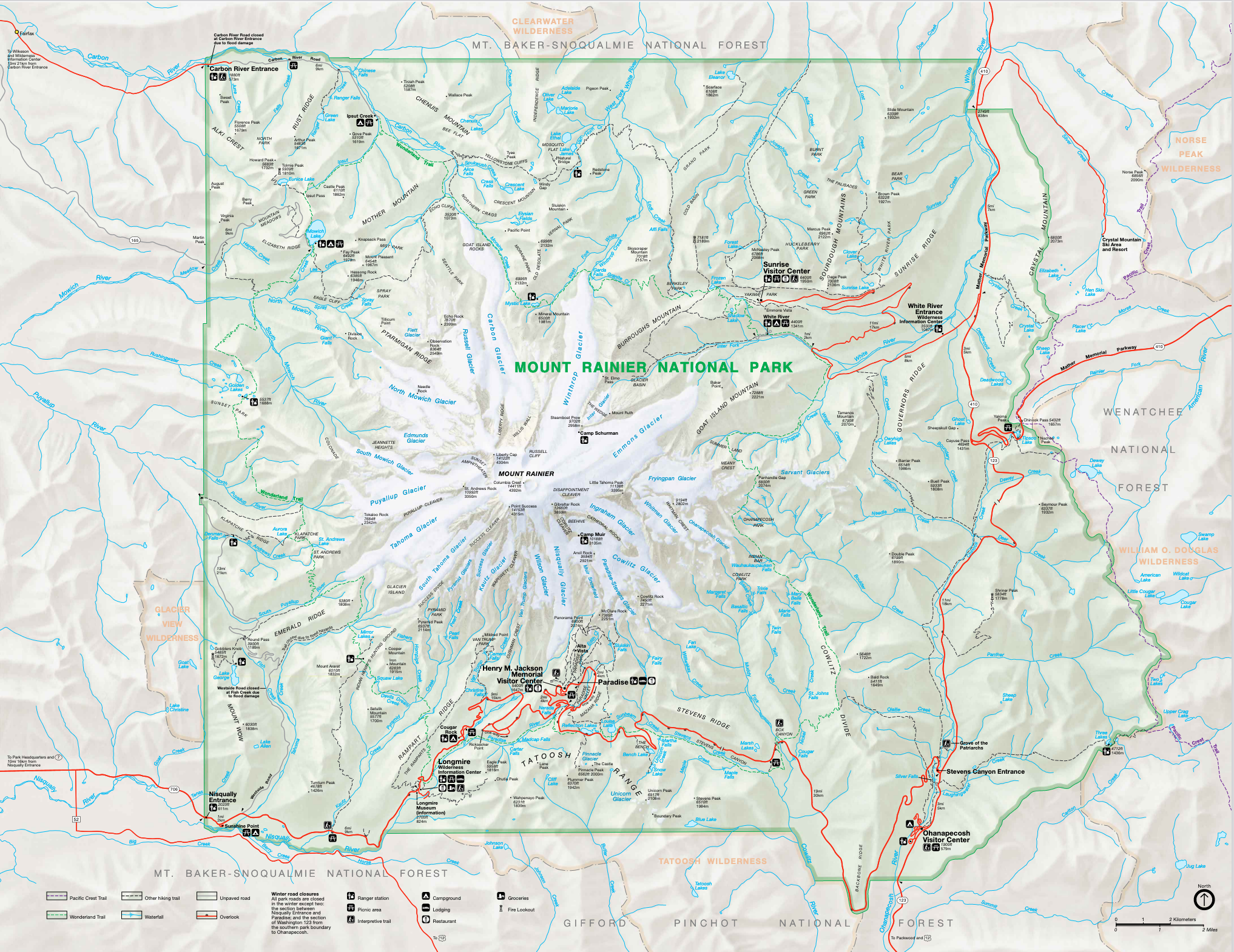
If you'd like to see an interactive map where you can zoom in on the various points of interest, this National Park Service Mt. Rainier National Park map will fit the bill. I use it frequently when planning my trips.
Mt. Rainier National Park Best Hikes
#1. Mt. Fremont Lookout Trail
- Difficulty Level: Moderate
- Distance: 5.6 miles round trip
- Elevation Gain: 1,200 feet
- Estimated Hiking Time: 3-5 hours
- Trailhead: Park at the Sunrise Visitor Center
- Region: Sunrise
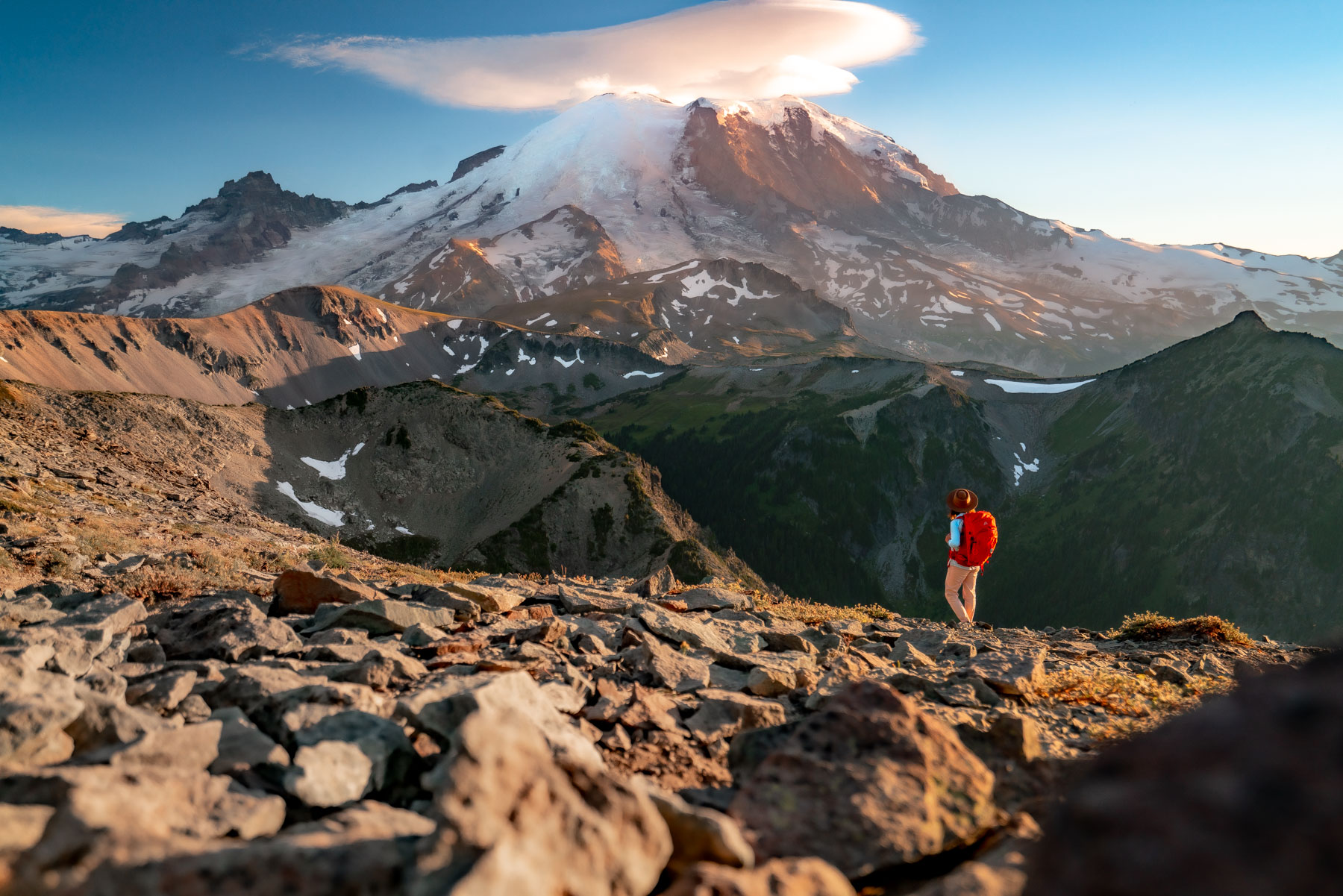
If you only have time for one hike at Mt. Rainier National Park during your visit, make it the Mt. Fremont Lookout Trail and you won't regret it.
The Mt. Fremont Lookout Trail offers one of the best vantage points of Mt. Rainier and puts the mountain's size into perspective. Most of my friends consider this the most memorable hike at Mt. Rainier National Park.
It's not hard to see why! The trail follows the Sourdough Ridge (think expansive alpine views) to Frozen Lake. Frozen Lake is the half-way mark of the hike and a great spot to take a break and have a snack (friendly reminder: make sure clean up after yourself and don't feed wildlife). Once you wrap up — hang right to begin your ascent to the Mt. Fremont Lookout.
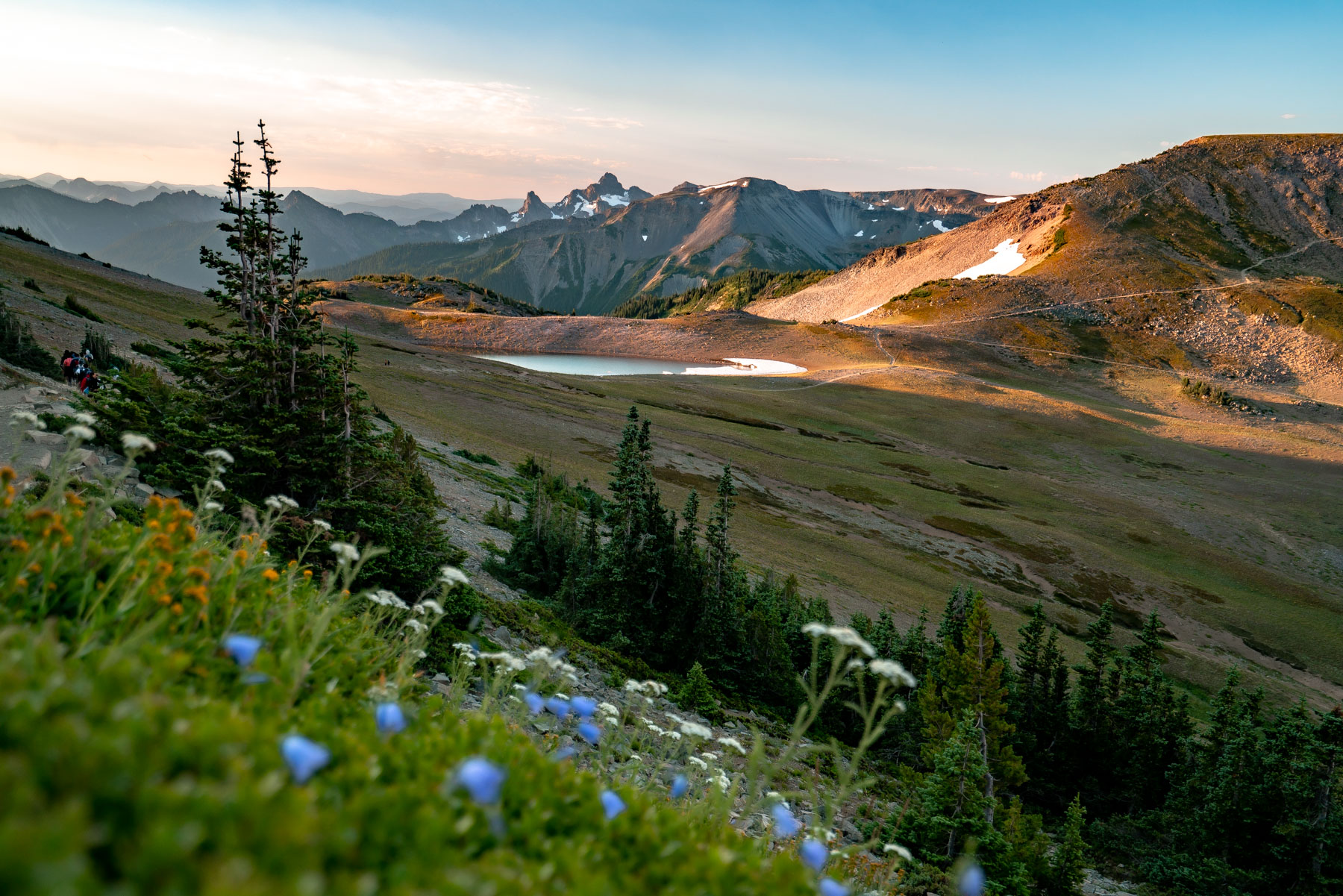
Image above: View of Frozen Lake and trail junction from the Mt. Fremont Lookout Trail. Hikers (left-hand side) ascend a steep hill to reach Mt. Fremont Lookout Trail.
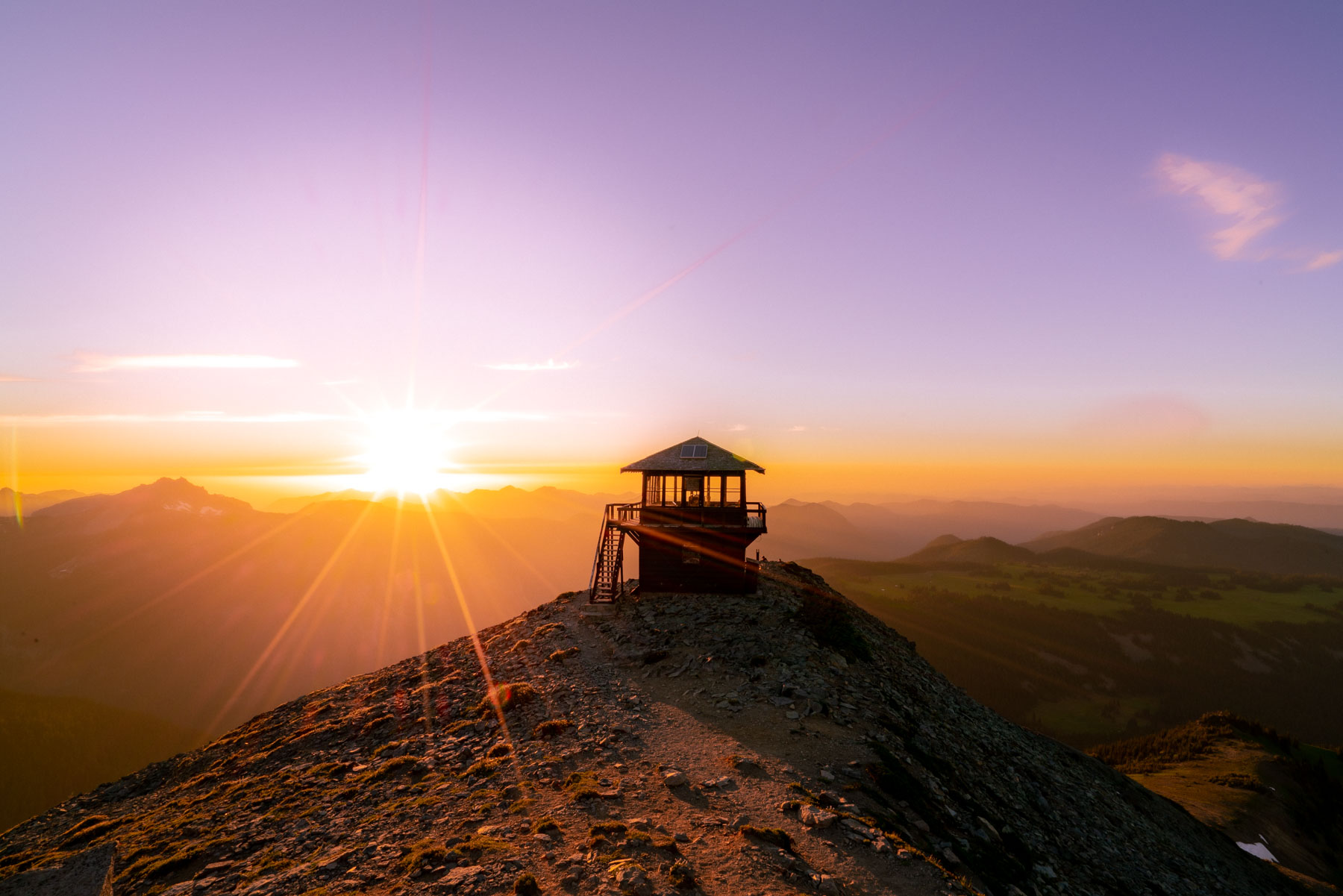
As you ascend the steep hill, you'll notice the views getting better and better. Hard to believe they can get any better, but believe me they do. Once you reach the top of the hill you'll notice that it curves around the lip of a mighty hillside, shortly after taking a turn you'll be able to see the lookout tower in the distance!
The panoramic views from Mt. Fremont Lookout Trail are jaw-dropping, which is why it's one of the best hikes at Mt. Rainier National Park. You'll notice Mt. Rainier is all her glory, pristine alpine lakes and dreamy rolling hills. This hike has it all, and since most of the trial isn't shrouded by forest, you'll be able to see everything around you.
Allow me to say it again, this is easily one of my favorite hikes at Mt. Rainier, you simply can't beat the scenery! It reminds me so much of this dreamy Switzerland village we visited during our honeymoon.
For more photos and a comprehensive trip report, read: Hiking the Mt. Fremont Lookout Trail at Mt. Rainier National Park
#2. Skyline Loop Trail
- Difficulty Level: Difficult
- Distance: 6-mile loop
- Elevation Gain: 1,700 feet
- Estimated Hiking Time: 4 hours
- Trailhead: Paradise Inn
- Region: Paradise
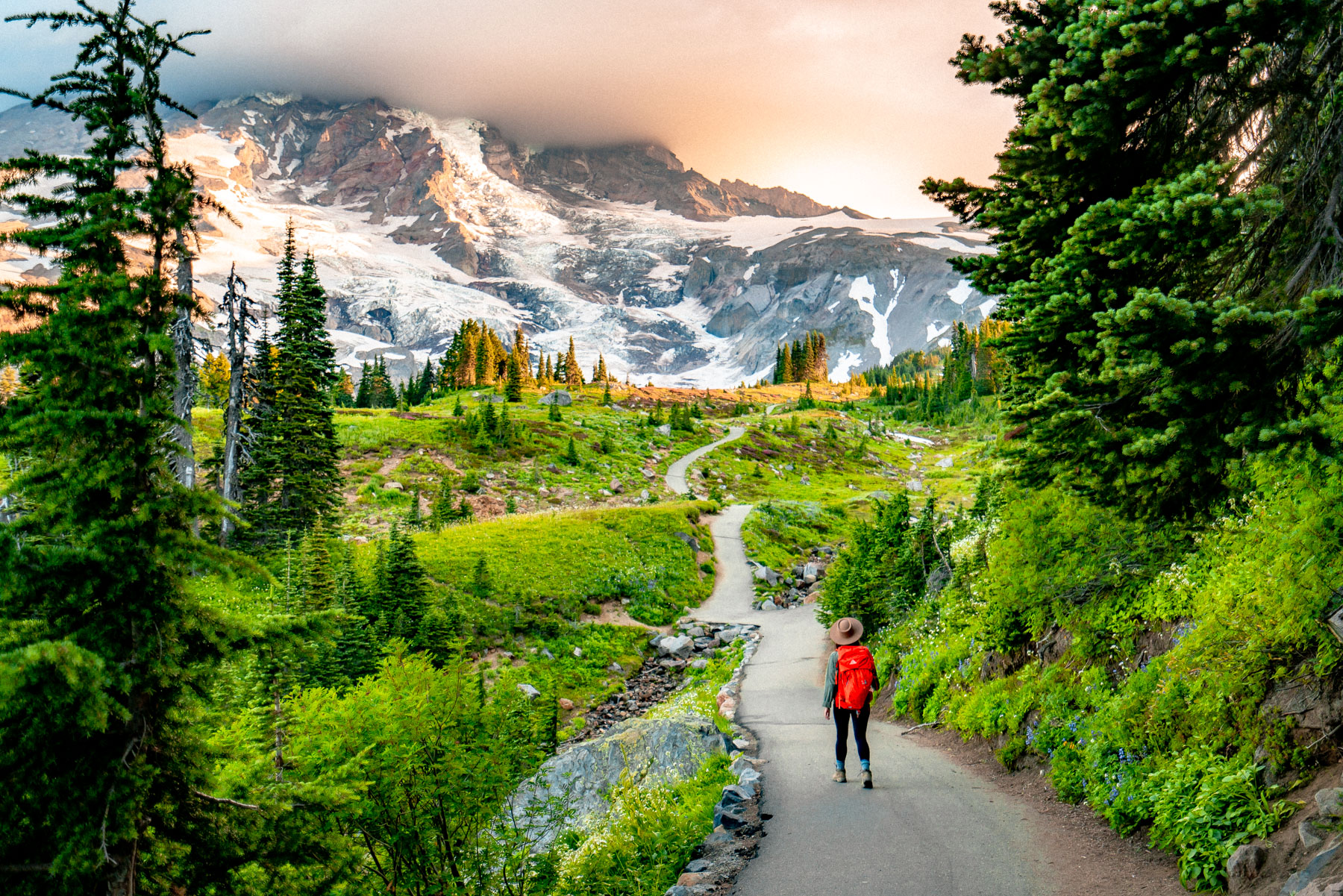
The Skyline Trail Loop is a great alpine hike at Mt. Rainier National Park. I highly recommend this trail for first-timers because it's arguably the most iconic and well-known trail in the park.
If you're visiting the park late-July through mid-August, you simply can't afford to miss hiking the Skyline Loop Trial when the wildflowers are at peak bloom, the high concentration of flowers makes this an incredible experience!
I won't fool you, if you plan to hike the entire Skyline Loop it's challenging but completely worthwhile because the scenery is incredible the duration of the trail, especially Myrtle Falls and Panorama Point. If you're an avid mountain lover, this is the hike for you.
You can choose to hike this Mt. Rainier trail clockwise or counterclockwise — completely up to you! I've hiked both routes multiple times and enjoy both routes equally, it's hard to go wrong.
The stunning alpine views from this high-elevation trail makes this one the best hikes at Mt. Rainier National Park, an experience you would be remiss to skip during your visit.
Note: If you're after the best wildflower hikes at Mt. Rainier, make sure to read this helpful post.
#3. Tolmie Peak Fire Lookout Trail
- Difficulty Level: Moderate
- Distance: 5.5 miles
- Elevation Gain: 1,600 feet
- Estimated Hiking Time: 4 hours
- Trailhead: Tolmie Peak Trailhead
- Region: Mowich
The Tolmie Peak Fire Lookout Trail isn't as popular as some of the other hikes at Mt. Rainier National Park. As such, it's a great hike if you'd like to avoid crowds.
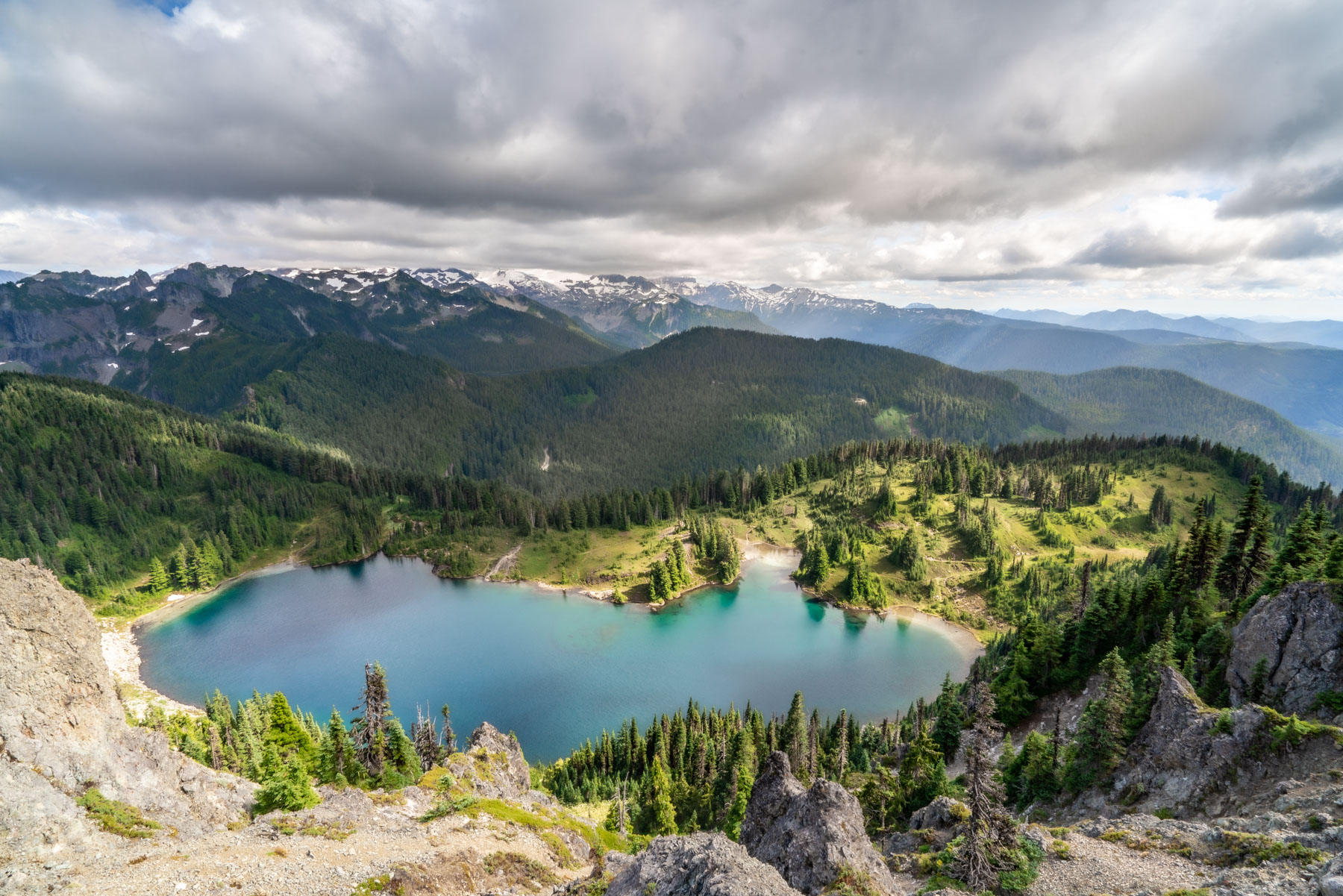
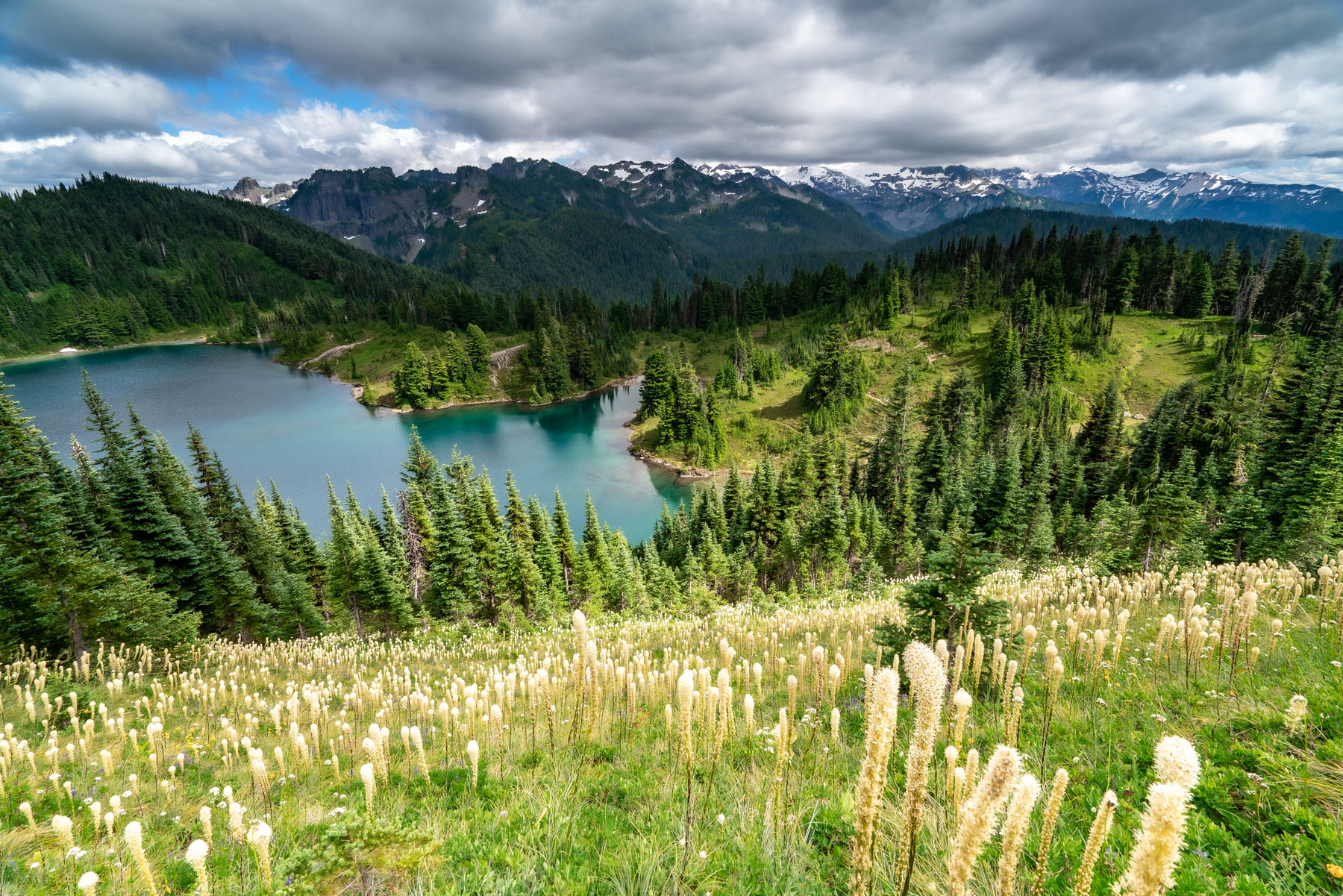
The trail follows a healthy forest until clearing out to a dramatic view of Eunice Lake, the pristine alpine lake pictured above. So if lush forests,glassy alpine lakes, wildflowers, and panoramic views of the famous Cascades are your cup of tea, this is the Mt. Rainier hike for you.
Soak up the beautiful views of Eunice Lake before heading further uphill to the Tolmie Peak Fire Lookout. From there, take in the glorious views of Mt. Rainier. The mountain was obstructed by clouds during our visit, try to visit when clear skies are predicted in the forecast for more dramatic views.
P.S. This is another great Mt. Rainier hike for wildflowers because the fields around the lake burst with color in the late summer months.
NOTE: Depending on the time of year you visit, mosquito repellent can be a necessity (here's the brand my husband and I swear by). I returned home with more than 100 mosquito bites (not exaggerating, we counted) after hiking this trail and so did my husband — mea culpa!
#4. Spray Park Trail
- Difficulty Level: Moderate/Difficult
- Distance: 7 miles
- Elevation Gain: 2,200 feet
- Estimated Hiking Time: 4.5 hours
- Trailhead: Mowich Campground
- Region: Mowich
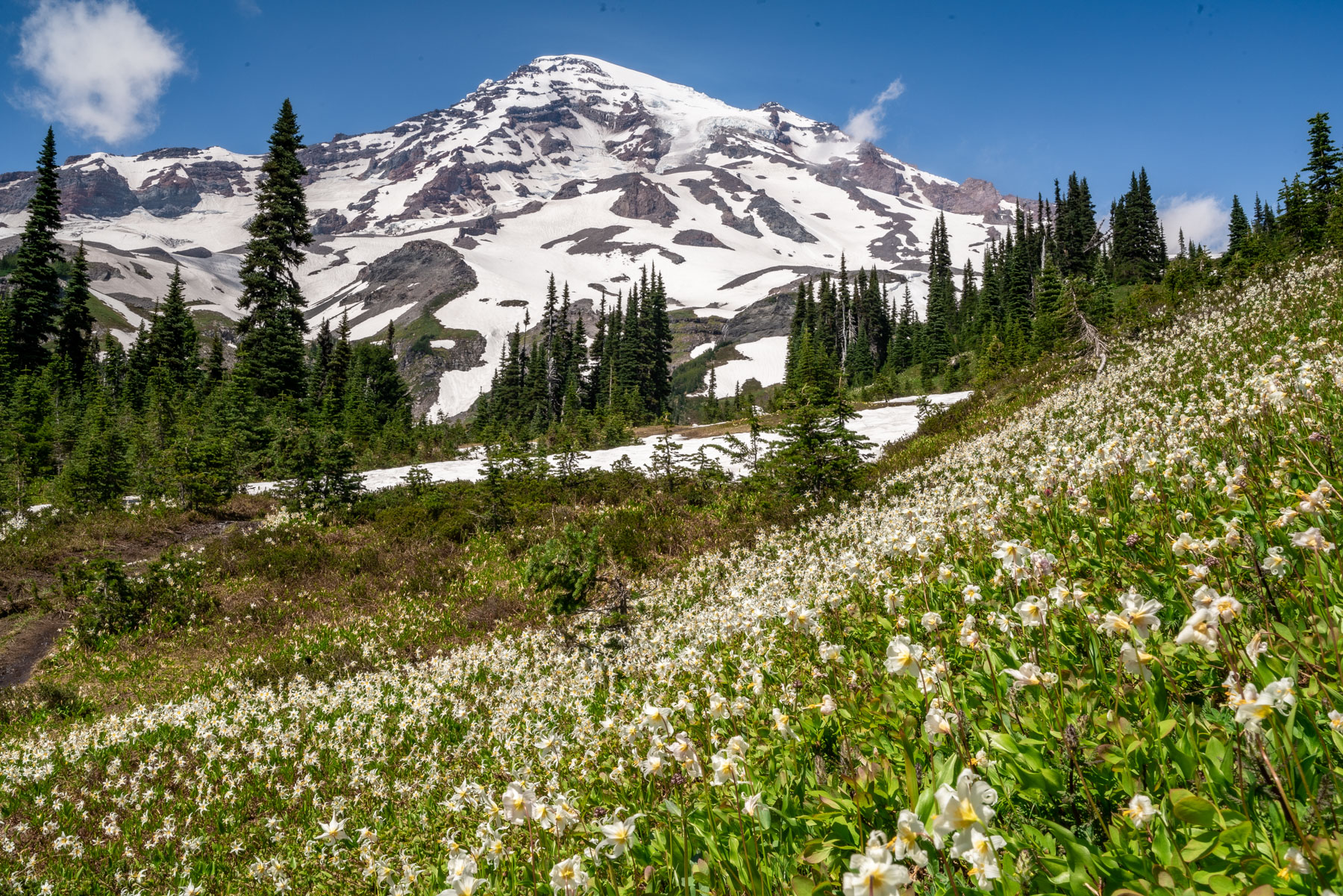
Chances are good that the most famous Mt. Rainier wildflower photos you've come across come from this popular hike at Mt. Rainier National Park. This trail has a high concentration of wildflowers, which makes it a great hike to do mid-July through August (all the info you need on wildflowers can be found here).
Spray Park Trail is a challenging hike because of the elevation gain. But it's so worth it because it offers phenomenal mountain views and takes you through a beautiful pine forest.
Note: Black bears frequent this area. Make sure to keep your distance if you spot one.
#5. Pinnacle Peak
- Difficulty Level: Moderate
- Distance: 2.4 miles
- Elevation Gain: 1,100 feet
- Estimated Hiking Time: 2-3 hours
- Trailhead: Reflection Lakes parking lots
- Region: Paradise
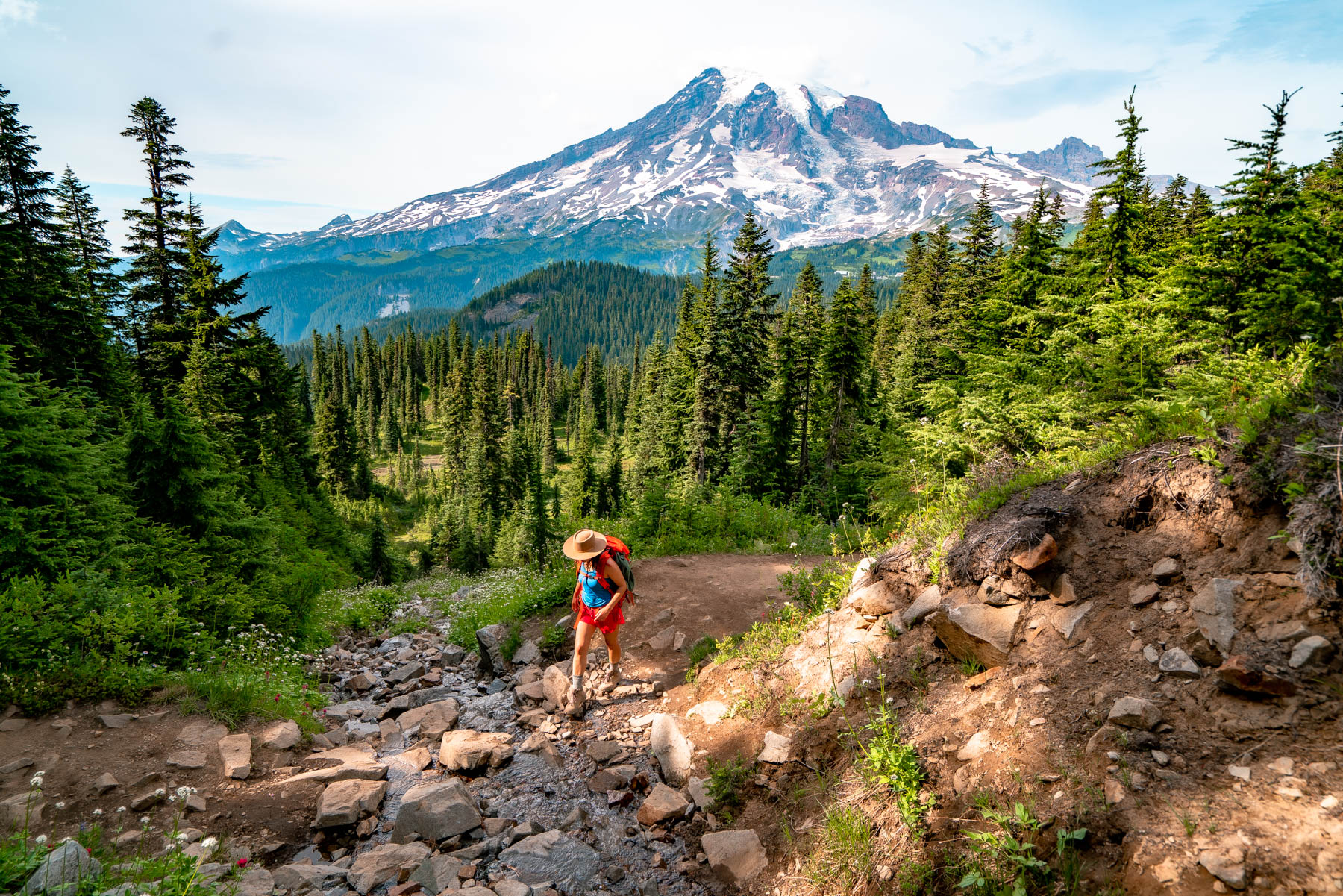
Pinnacle Peak is one of the most popular hikes at Mt. Rainier National Park because of the iconic views of Mt. Rainier from the hike's summit, in addition to Mt. Adams, Goat Rocks and striking mountain ridges as far as the eye can see.
The elevation gain is steep, but considering the short distance to the summit, it's completely worth the effort. The jaw-dropping views in a relatively short distance because this Mt. Rainier hike one of the best bangs for your buck.
I enjoy the Pinnacle Peak Trail so much that I've hiked it six times, it never gets old!
Note: We saw TONS of marmots on this hike as we approached the summit. We could have spent hours simply watching them run around.
#6. Van Trump Park
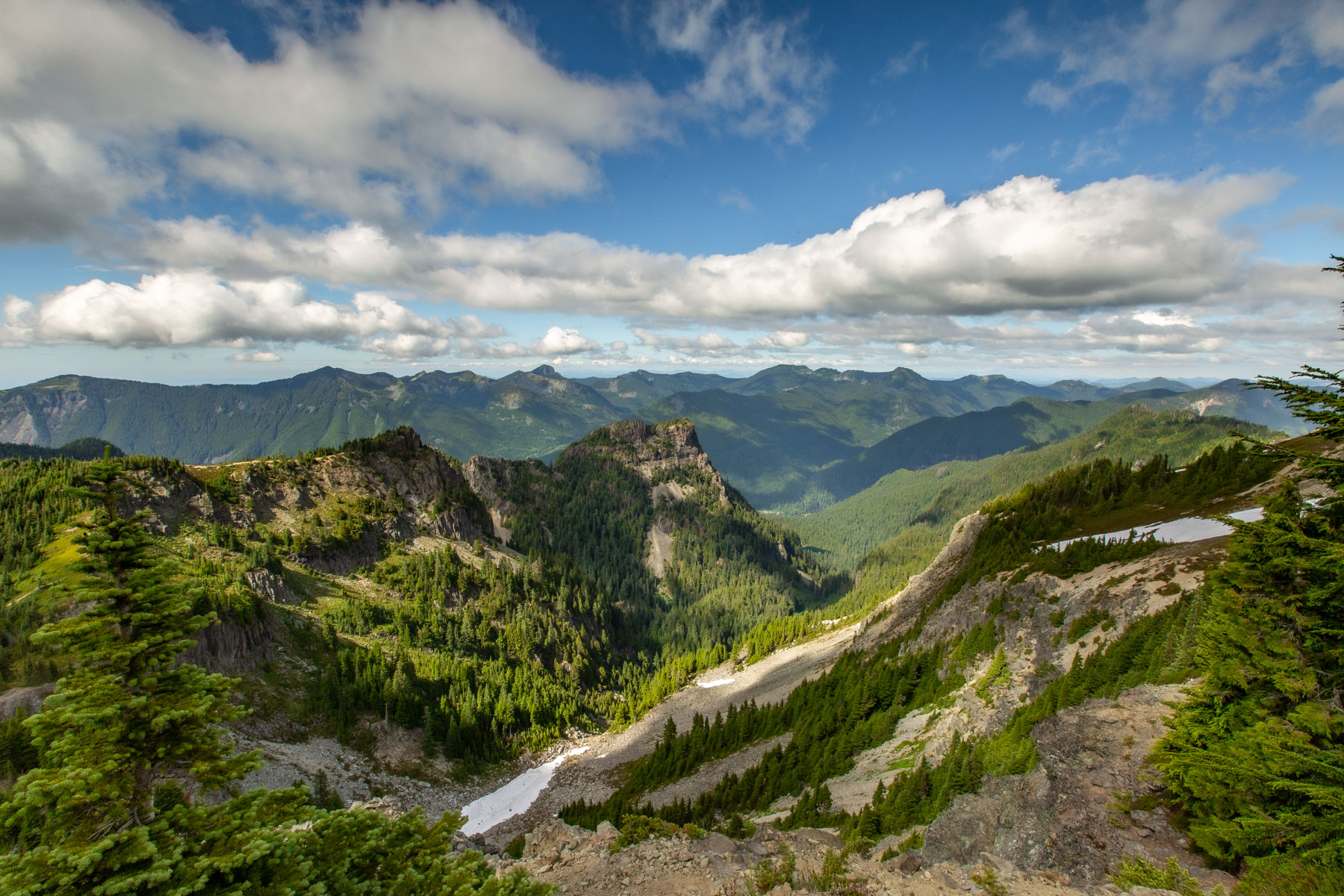
- Difficulty Level: Moderate/Difficult
- Distance: 6 miles
- Elevation Gain: 2,150 feet
- Estimated Hiking Time: 4 hours
- Trailhead: Comet Falls Trailhead
- Region: Paradise
This gem of a trail isn't considered a very popular hike at Mt. Rainier National park and it puzzles me — but hey, you won't hear me complaining. I can't stop thinking about the breathtaking scenery from the top.
Elevation is the name of the game with this beautiful Mt. Rainier hike, folks. The steep trail ascends past Comet Falls (the tallest waterfall at Mt. Rainier National Park) an onward towards breathtaking meadows ablaze with wildflowers.
What's more, because the elevation is so high, we felt like we were ON the mountain, en route to the summit. That's how close the Van Trump Park trail gets you to Mount Rainier. We even saw mountain goats!
#7. Burroughs Mountain Trail
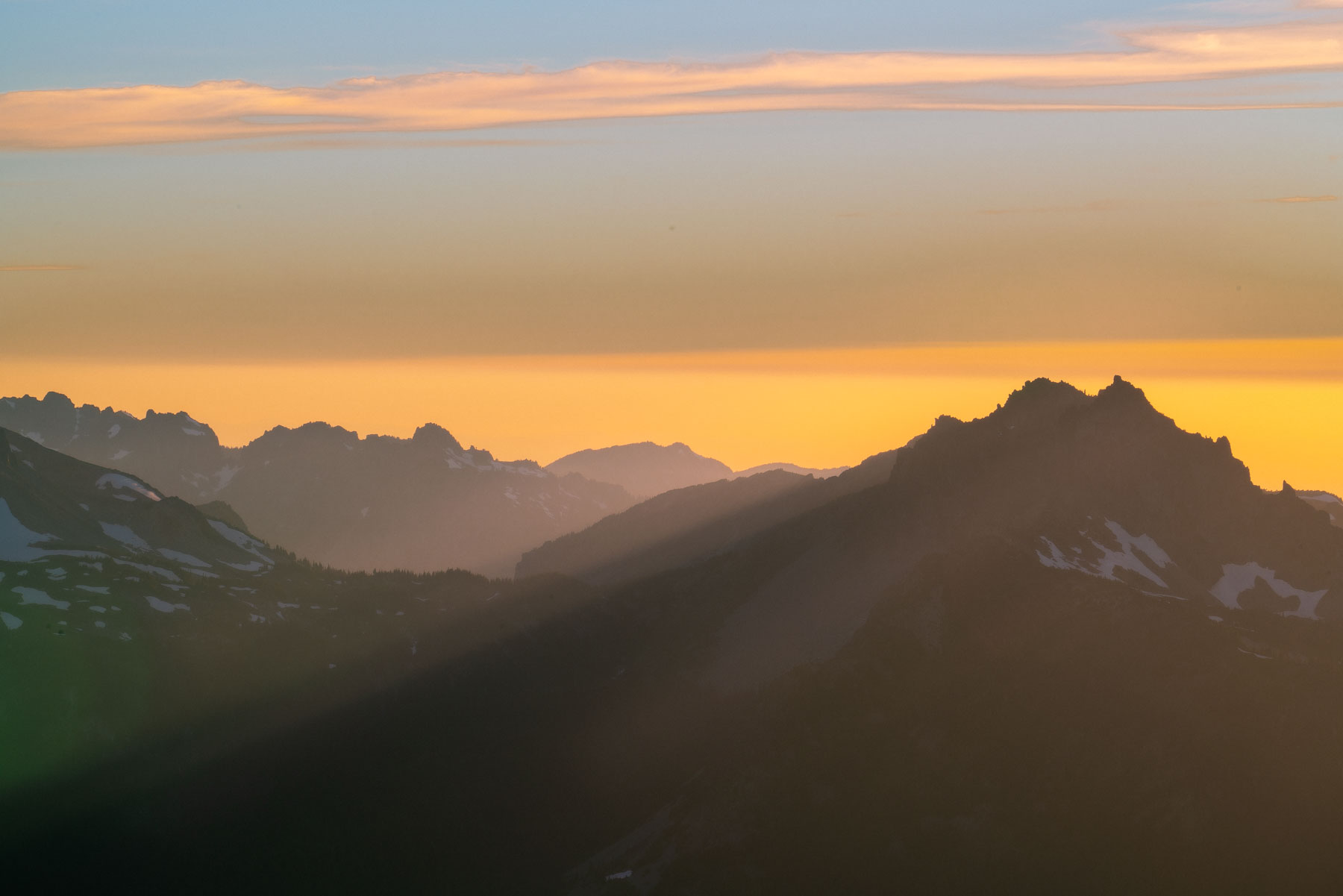
- Difficulty Level: Moderate
- Distance: 5.5 miles
- Elevation Gain: 1,500 feet
- Estimated Hiking Time: 4 hours
- Trailhead: Sunrise Visitor Center parking lot
- Region: Sunrise
This Mt. Rainier hike has the same starting point as my favorite hike at Mt. Rainier National Park (the Mt. Fremont Lookout Trail) but instead of taking right at Frozen Lake junction, you'll take a left (fret not, the trail signs are easy to follow) and begin the Burroughs Mountain trail.
Let me tell you, this trail takes you SO close to Mt. Rainier it feels like you're en route to the summit! The Burroughs Mountain Trail leads to the most dramatic viewpoint of the surrounding valleys and brings you to eye level with Mt. Rainier, it's a very memorable hike!
This is considered one of the most popular hikes at Mt. Rainier National Parks's Sunrise region (for good reason), so expect crowds.
#8. Sunrise Nature Trail
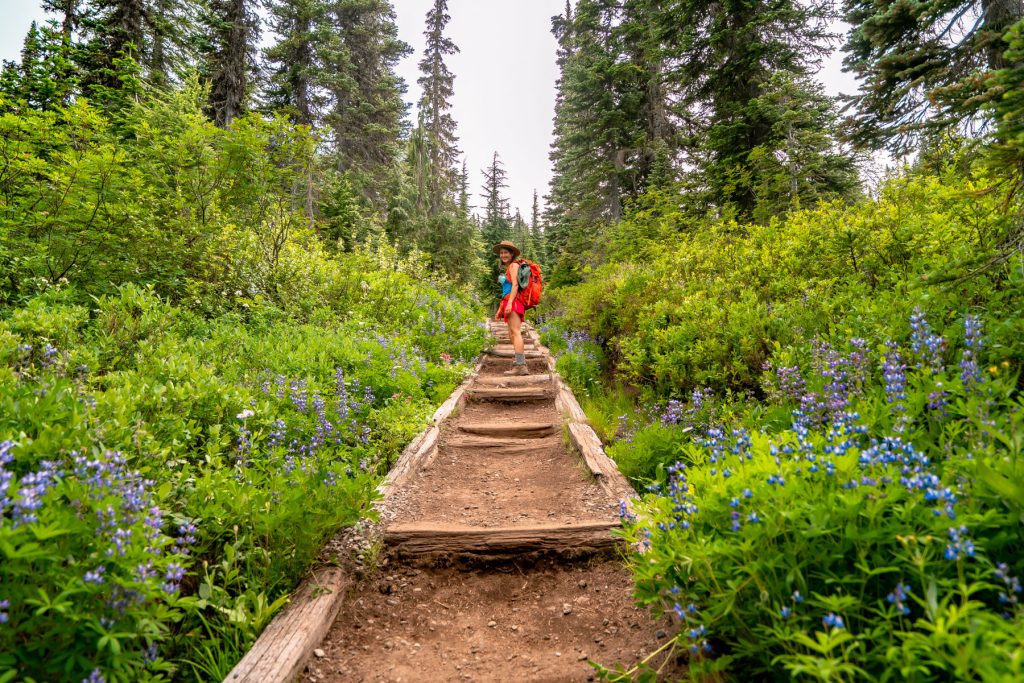
- Difficulty Level: Easy
- Distance: 1.5 miles
- Elevation Gain: 300 feet
- Estimated Hiking Time: 45-minutes
- Trailhead: Sunrise Visitor Center
- Region: Sunrise
The Sunrise Trail is a great, easy trail that starts from the Sunrise parking lot. In the Summer you can see beautiful wildflower displays and catch incredible views of Mount Rainier from arguably the most iconic angle.
With an elevation gain of 300 feet, this is a great easy hike at Mt. Rainier National Park.
If you're into star gazing, this is a great spot to catch the Perseid meteor shower. Especially as the milky way aligns behind the mountain, which creates the perfect conditions for stunning astro-photography.
#9. Grove of the Patriarchs
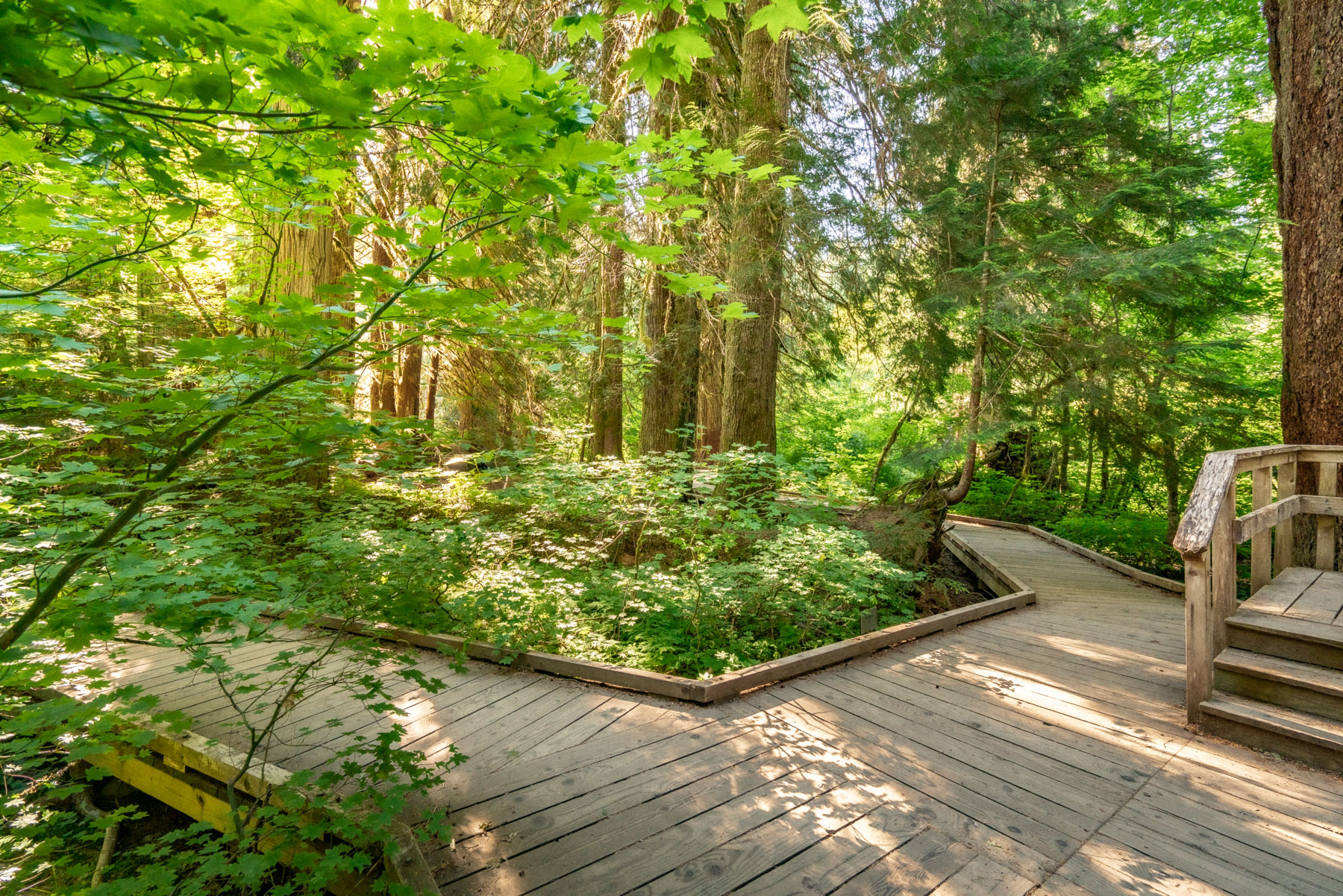
- Difficulty Level: Easy
- Distance: 1.5 miles
- Elevation Gain: 50 feet
- Estimated Hiking Time: 30-minutes
- Trailhead: Steven's Canyon Road
- Region: Steven's Canyon
The Grove of the Patriarchs is another easy hike at Mt. Rainier National Park perfect for families with small children. The trail is completely flat and leads you through some of the largest and oldest trees at Mt. Rainier National Park.
Towering red cedars (some over 1000 years old), Douglas firs, and western hemlocks are the stars of the show on this Mt. Rainier hike, although the suspension bridge (before you hit the boardwalk) is pretty cool too. 😉
Much of this trail follows a boardwalk that snakes through the giant trees – kids will love this Mt. Rainier hike.
Kid friendly Mt. Rainier hikes, best hikes for kids Mt. Rainier, family hikes Mt. Rainier,
#10. The Wonderland Trail
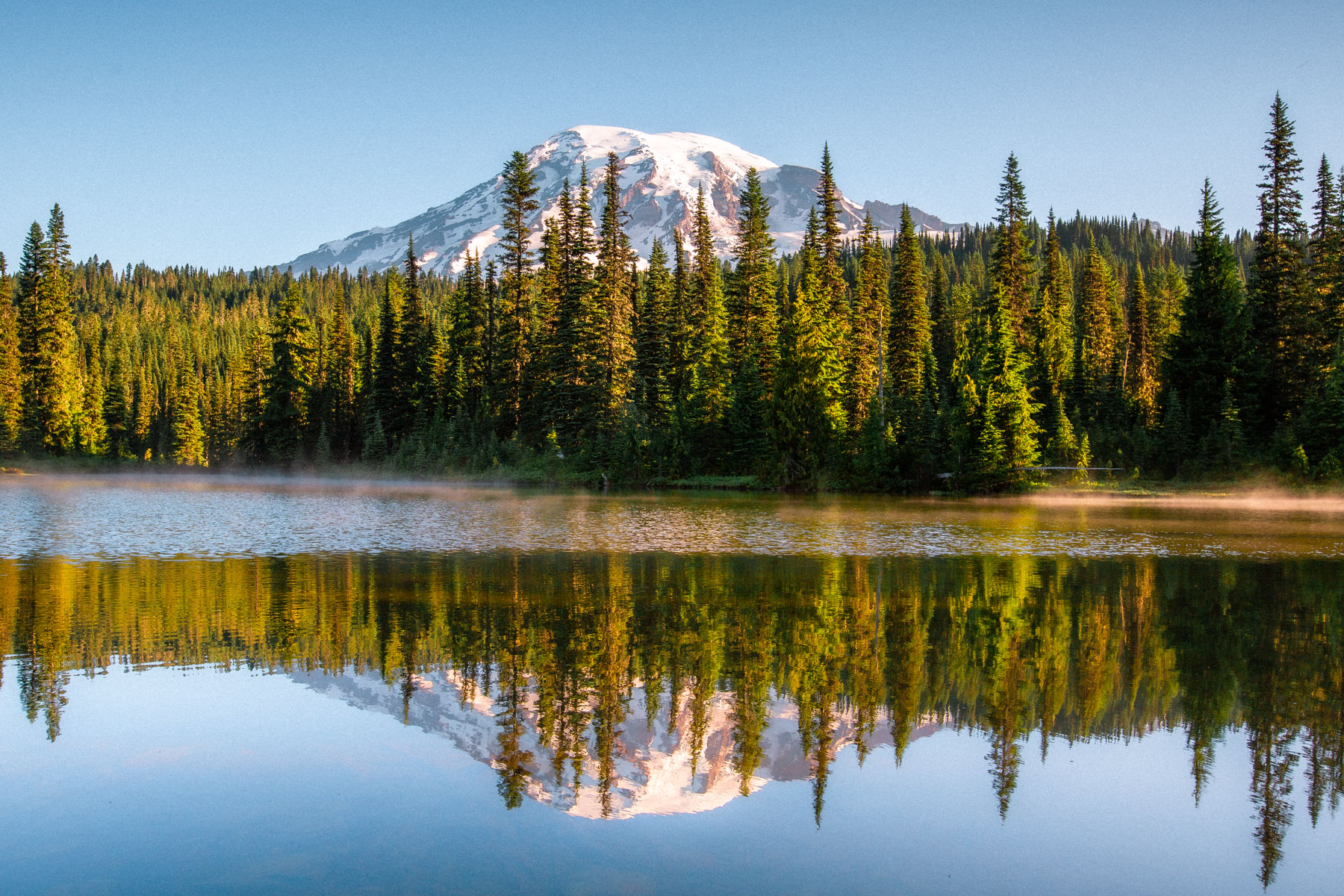
- Difficulty Level: Difficult (you deserve a cape upon completion!)
- Distance: 93-miles
- Elevation Gain: 22,000 feet
- Estimated Hiking Time: 10-13 days
- Trailhead: Various, it depends on your starting point
- Region: Covers all regions of Mt. Rainier National Park
The Wonderland Trail is an epic Mt. Rainier hike that circumnavigates the mountain and is only recommended for skilled hikers because it takes 10 days to complete, on average.
Since this Mt. Rainier hike loops the entire mountain, you can expect to see the best this national park has to offer. You'll see breathtaking alpine views from high-elevation vantage points, follow charming creeks and immerse yourself in healthy pine forests — it's the full package!
I consider the Wonderland Trial as one of the best hikes at Mt. Rainer National Park because you can break it down across multiple trips if you'd like. So it's manageable should you choose to tackle it in bite-sized pieces. Of you can take on the whole thing at once — more power to you!
Note: A permit is required to hike the Wonderland Trail.
#11. Comet Falls Trail
- Difficulty Level: Moderate
- Distance: 4 miles
- Elevation Gain: 900 feet
- Estimated Hiking Time: 3 hours
- Trailhead: Van Trump Park Trailhead
- Region: Paradise
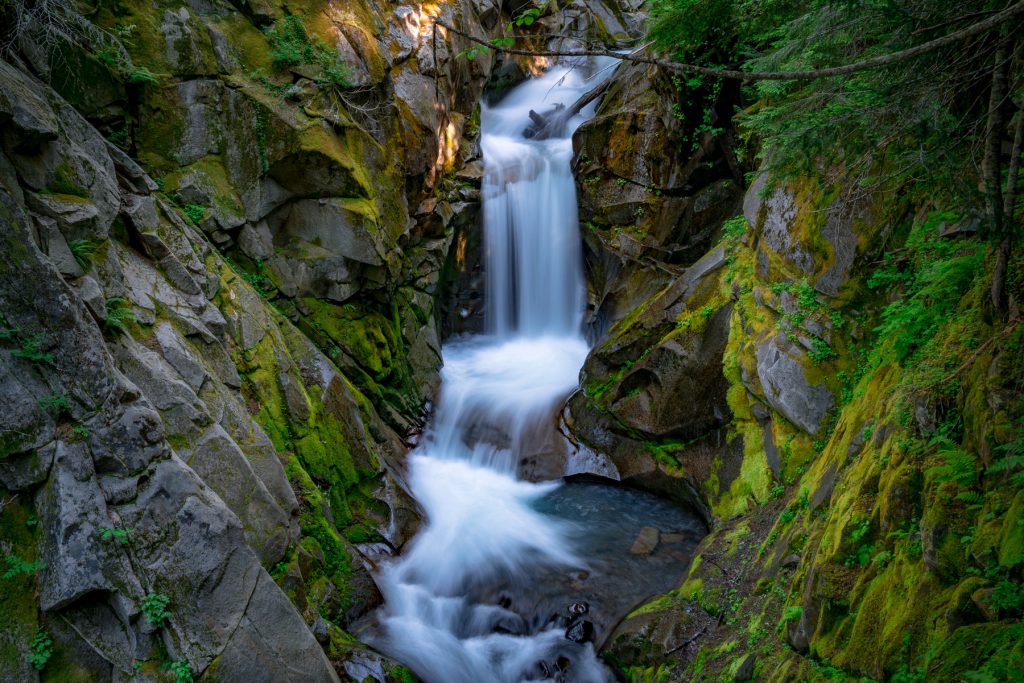
Comet Falls is one of the highest falls in the park and gets it name from its shape (like a comet). The trail is fairly steep up to the falls. Hikers with knee issues might feel them acting up on the way down.
But don't let a bit of steepness get in the way of a great hike! Comet Falls is massive and stunning. If you feel up to it you can continue up the trail from the falls all the way up to Van Trump Park (another 1000ft+ elevation).
#12. Nisqually Vista Trail
- Difficulty Level: Easy
- Distance: 1-mile
- Elevation Gain: 200 feet
- Estimated Hiking Time: 45-minutes to 1-hour
- Trailhead: Paradise Inn parking lot
- Region: Paradise
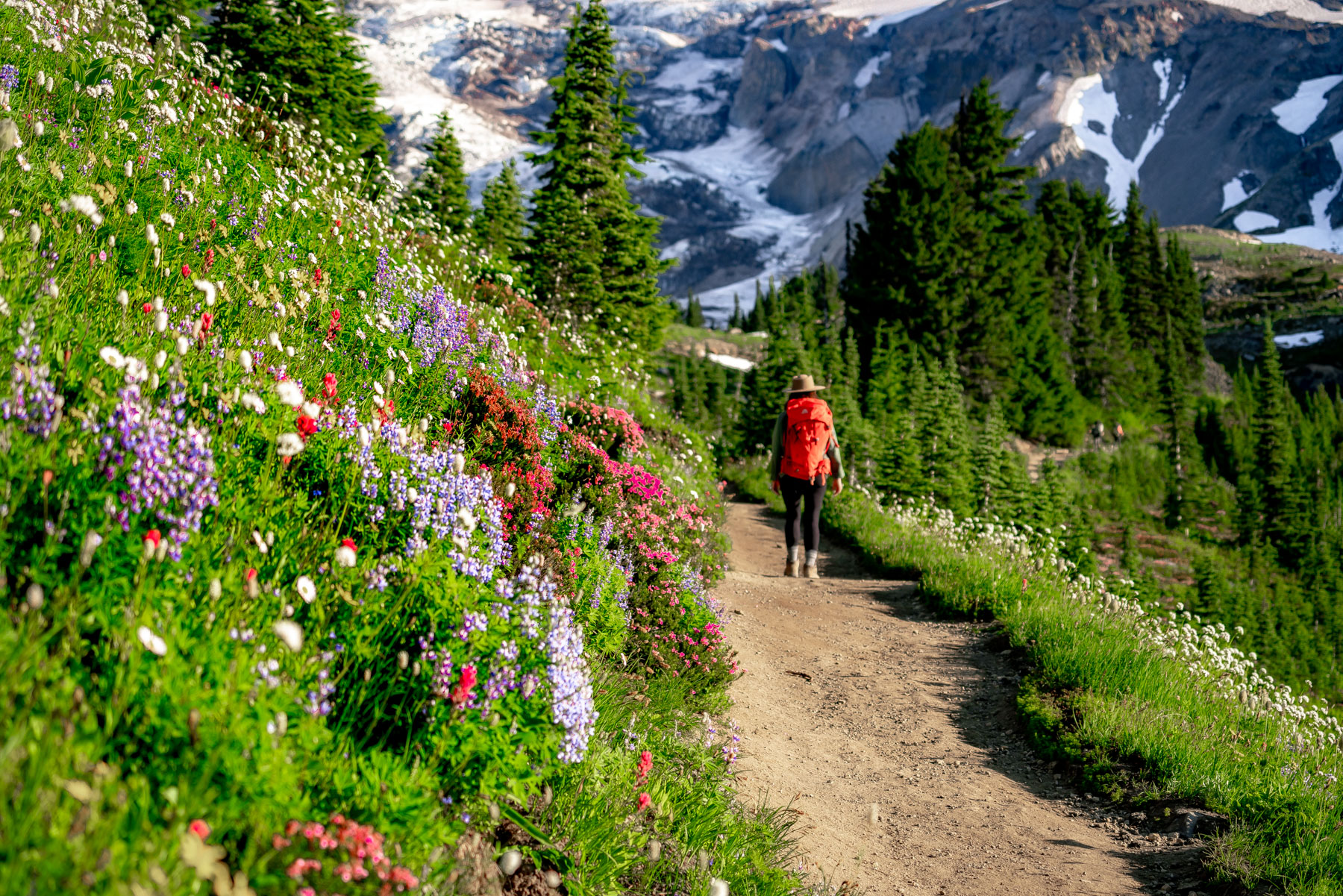
If you enjoy the Skyline Trail and would like to take in the views of Mt. Rainier from a different vantage point than the the Nisqually Vista Trail is another great option for you.
This easy hike at Mt. Rainier National Park follows a paved trail and offers similarly stunning views to the famous Skyline Trail but is easier on the knees and much less crowded.
As you can see in the photo above, this Mt. Rainier hike is covered in wildflowers during the summer months. Chances are good you will also notice a plethora of furry marmots along the trail — it feels like a scene out of a Tolkein book!
#13. Naches Peak Loop
- Difficulty Level: Easy
- Distance: 3.2 miles
- Elevation Gain: 600 feet
- Estimated Hiking Time: 2 hours
- Trailhead: Park at trailheads off Highway 410
- Region: Stevens Canyon
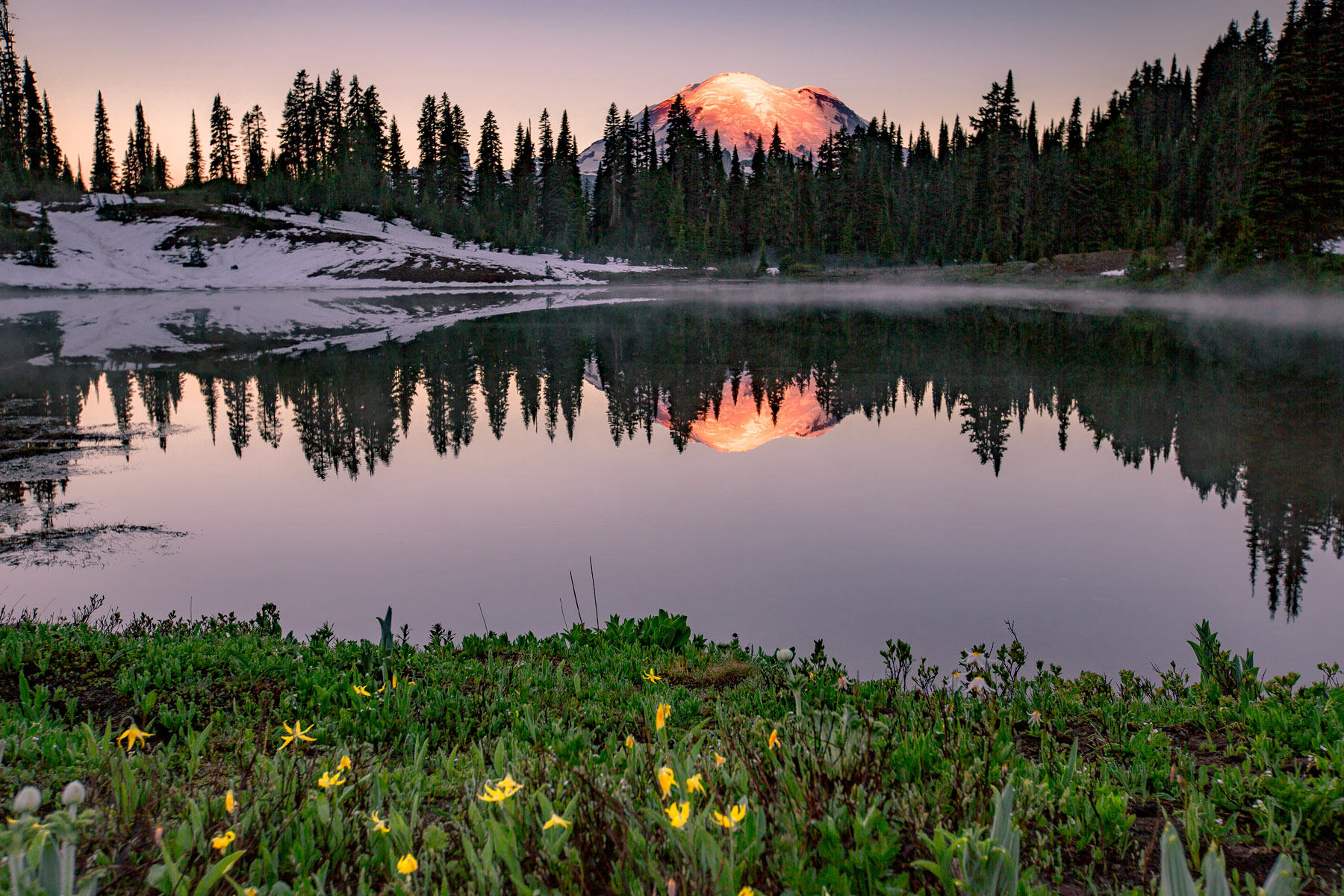
The Naches Peak Loop Trail is a great Mt. Rainier hike if you'd like to soak in the views on the glorious Stevens Canyon section of the park.
The trail starts at Tipsoo Lake and crosses a lush hillside, ascending a gentle hill while offering great views of the alpine valleys below. Visit during wildflower season for breathtaking views of wildflowers. You can hike this trial clockwise or counterclockwise, I've hiked it both directions are prefer the clockwise version because of the jaw-dropping views of Mt. Rainier!
Note: This Mt. Rainier hike is especially good for colorful sunrises!
Helpful information about visiting Mt. Rainier National Park
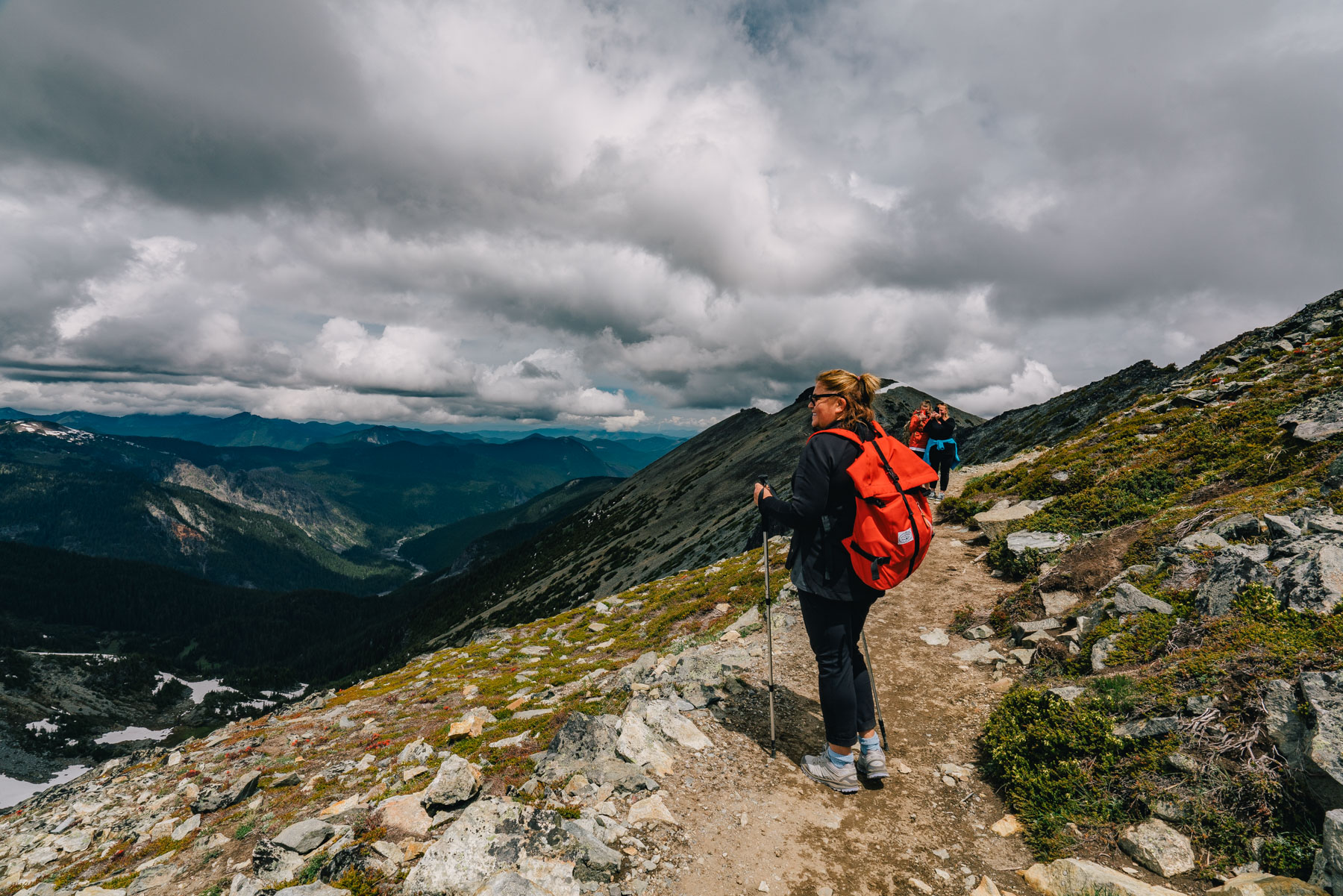
Best Time to Visit Mount Rainier National Park
I've hiked in Mt. Rainier National Park during every season and, without a shadow of doubt, can confirm that summer is the absolute best time to visit.
During the summer months (from July through August), you'll be privy to clear skies, sunshine and comfortable hiking temperatures. However, you'll be fighting crowds on the trails since summer is peak tourist season at the park.But don't let the crowds deter you, the trails will be beautiful, snow-free and wildflowers will be in bloom. Just keep your mosquito repellent handy because those little guys are bound to find a way to you, trust me.
Another great time to visit Mt. Rainier National Park is in the fall (September through October), but the temperatures will be significantly cooler, so plan accordingly. However, the cooler temps will reduce the crowds substantially, with is a perk.
Keep a close eye on the forecast because rain is very common during the fall months and hiking at Mt. Rainier will NOT be enjoyable when the rain rolls in. What's more, you can except snow on the trails — great for snowshoeing, not great for hiking. So keep that in mind as well!
Too long? Here's the short version: Mt. Rainier National Park has a shorty hiking season due to the amount of snowfall in the area. The best time to hike at Mt. Rainier is July through September. During the fall, winter and spring season most of the park roads are closed.
All this to say, make sure you time your visit during the summer season if you can. During summer the temperatures are mild (perfect for hiking) and the wildflower season, which occurs late July through mid-August, completely transforms the park with color.
It's worth mentioning that Mt. Rainier National Park is snow free mid-July to mid-October. Unless you're into snowshoeing, these are the best month to hike in the park.
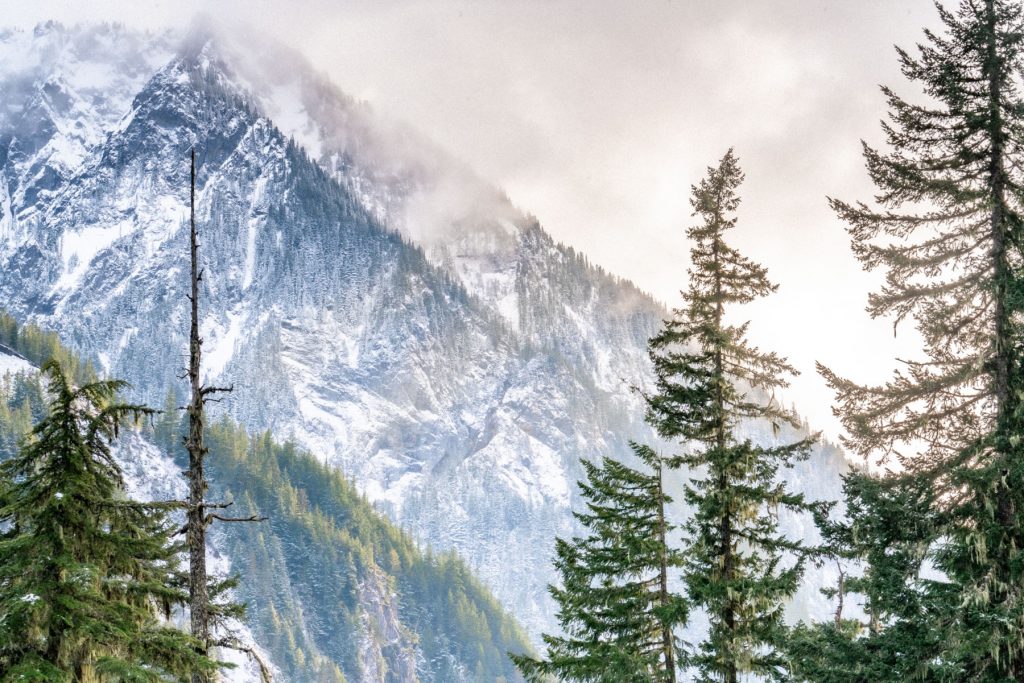
Fees & Passes
There is an admission fee to enter Mount Rainier National Park.
- America the Beautiful Annual Pass $80 (best option, allows access to ALL US national parks for a year)
- Mt. Rainier Annual Pass $55 (click here to purchase the pass online)
- 7-Day Admission $30/vehicle
For example, one time my husband and I were leaving the park around noon and counted 120 cars in line waiting to get into the park. The wait was several hours long!
Driving & Gas
For the most part, driving at Mt. Rainier National Park is a breeze because the roads are very well maintained. However, it never hurts to check current road conditions before heading out.
Gas is NOT available in the park, but there are gas stations in the local communities nearby.
During busy season (mostly summer) you can expect over-flowing parking lots, some delays and a long line to get in. My advice is to come as early as possible (think 8am) to avoid the crazy surge.
Lodging & Camping
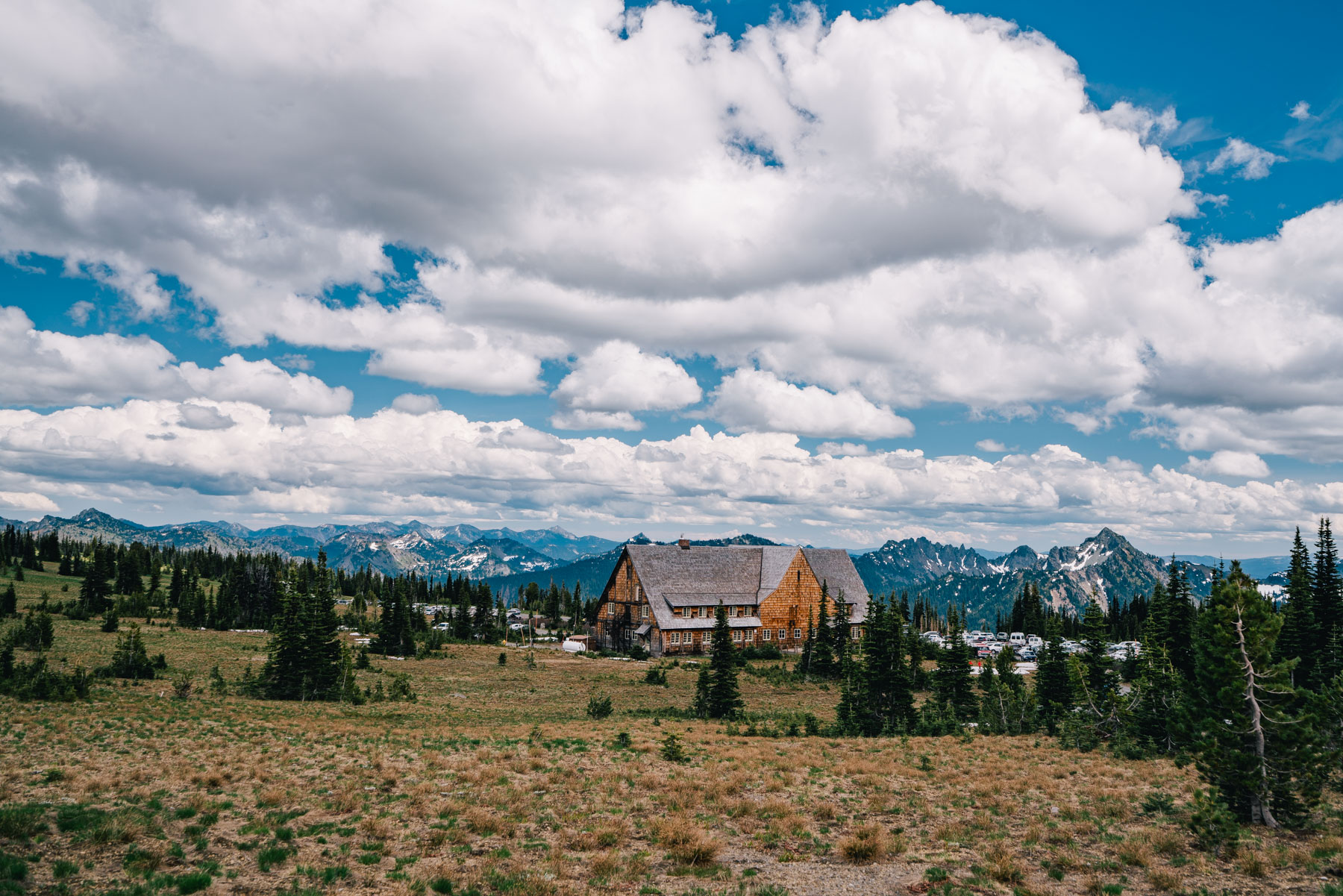
There are two inns located within the park:
- Paradise Inn (Paradise)
- National Park Inn (Longmire)
There are four designated campsites at Mt. Rainier:
- Cougar Rock
- Ohanapecosh
- White River
- Mowich Lake
For information and rules about camping at Mt. Rainier, read: Plan Your Visit | Campgrounds at Mt. Rainier
Wilderness (Backcountry) Camping & Hiking at Mount Rainier National Park
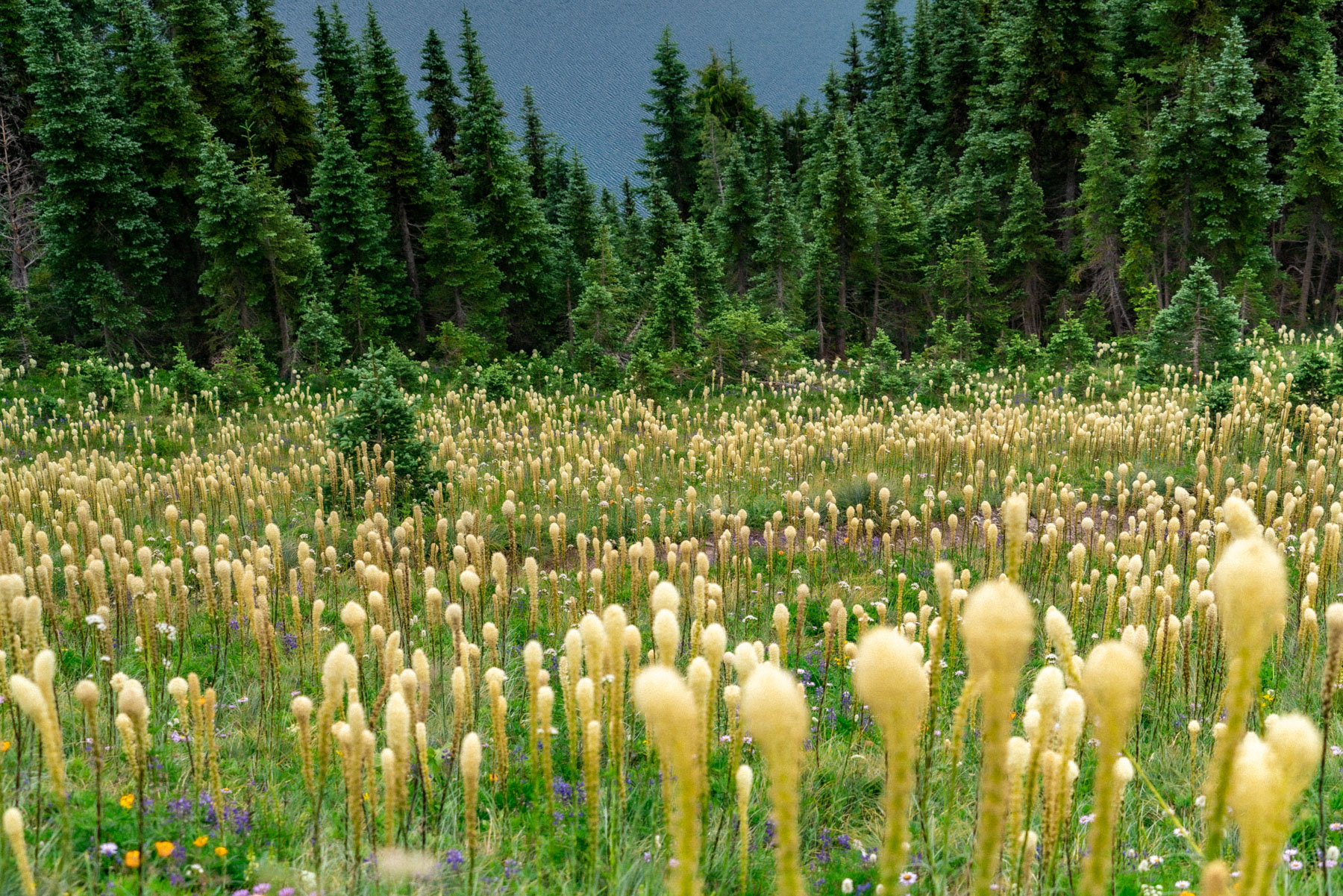
Camping overnight in the wilderness requires a wilderness permit. To determine the best adventure for you, read the Wilderness Trip Planner.
Summer: Permits available at all ranger stations during operating hours.
Winter: Permits available at the Longmire Visitor Center everyday and the Jackson Visitor Center on weekends.
In winter, self-registration is available at the Carbon River Ranger Station, Ohanapecosh Ranger Station and the Highway 410 entrance.
Mt. Rainier National Park Facts
You know me, I'm a sucker for random trivia and I'm eager to spread the love. Let's get cracking!
- Mt. Rainier is an active volcano, in fact, it's considered one of the deadliest volcanoes in the entire world.
- Walt Disney honeymooned at Mt. Rainier National Park.
- Mt. Rainier is America's 5th national park – making it one of the oldest. It was established in 1899. What's more, it was the first national park to allow cars.
- With 25 glaciers to its name, Mt. Rainier is the most heavily glaciated peak in the lower 48 – how cool is that!
- The mountain's original (read: native) name is a variation of Tacoma/ Tahoma. The mountain as we know it today is named after Captain George Vancouver's friend — Peter Rainier.
- More than 280 species of wildlife call the park home.
Getting to Mt. Rainier National Park
Getting to Mt. Rainier National Park is a fairy easy thing to do, lucky for us! It's a short(ish) drive from both Seattle and Portland.
Seattle International Airport
- The drive from Seattle to the park takes approximately 2-3 hours, depending on the entrance point.
Portland International Airport
- The drive from Portland to the park takes approximately 2 – 3 hours to reach Paradise. We do this drive almost every other weekend in summer, it's a breeze!
Mt. Rainier Park Entrances
Mt. Rainier National Park has five entrances, here's a quick rundown below.
- Sunrise (northeast corner), road open year-round except in the event of heavy snowfall.
- Nisqually (southwest corner), road only open in the summer and early fall.
- Mowich Lake (northwest corner), road only open in summer.
Best Hikes Mt. Rainier (Post Summary)
In sum, the BEST hikes at Mt. Rainier National Park are:
- Mt. Fremont Lookout Trail
- Skyline Trail
- Tolmie Peak Trail
- Spray Park Trail
- Pinnacle Peak Hike
- Van Trump Park
- Burroughs Mountain Trail
- Sunrise Nature Trail
- Grove of the Patriarchs
- The Wonderland Trail
- Comet Falls
- Nisqually Vista Loop
- Naches Loop Trail
Mt. Rainier National Park Best Hikes Map
Mt. Rainier calls to me in the way that lovely things call to people that appreciate them. It demands attention merely because it exists.
This alpine national park is so beautiful I find it impossible to stay away too long. I'm an avid national park nut and spend most of my free time hiking. Since I live closest to Mt. Rainier National Park, the poor park doesn't get a break from me!
I bet you will know EXACTLY what I mean after your visit. If you have any questions, don't hesitate to reach out!
Love Washington's epic national parks?
Check out this video on another Washington state stunner, Olympic National Park (where I got engaged!).
Packing for day hikes at Mt. Rainier National Park
Hydroflask Water Bottle: Keeps ice cold and coffee hot. Durable, lightweight, and easy to clip on to things. Comes in lots of colors. What more can you ask for. In terms of an all around hiking sock there really is no better than Darn Tough Vermont's hiking socks. These socks can be worn over and over again on the trail (and I mean consecutive days out camping) and feel as good as new each morning.
Darn Tough Vermont Hiking Socks : I cannot overemphasize the importance of good hiking socks when you're out there and for those of us who know, there's one brand that stands above the rest.
Patagonia Arbor Backpack: This is a great casual backpack we use all the time. Always stocked in photogenic colors to boot. The canvas exterior is tough and durable against the elements.
Patagonia Point Peak Trail Pants: Such an underrated piece of equipment for hikers – the right pants. They should be durable and rugged, weather-proof, and able to stand up to scrapes and multiple days on the trail at a time.
Patagonia Nano Puff Hoody : Obviously this list was going to contain jackets and as far as I'm concerned nobody makes better all-around, versatile jackets than Patagonia. I wear them just about everywhere and they're never lacking.
Energizer High-Powered LED Headlamp: These are fun gadgets aren't they? There's a lot of options out there when it comes to headlamps, but we find that simple is better here. This thing is lightweight, affordable, long lasting, and does everything you need it to.
Gerber Multi-Tool: A multi-tool is one of those things you forget about until you need it – and you inevitably always do. We like this one for the price, durability, and ease of use.
Polar Bear Coolers Original Nylon Soft Cooler: Coolers are another opportunity to get lost searching for the right one. We like soft coolers as they're much more versatile than hard ones and can be used for any occasion. Polar Bear is the trusted brand here, they don't leak or sweat, and keep things ice cold for at least 24hrs.
Happy hiking!
Antonina
Source: https://embracesomeplace.com/best-hikes-mt-rainier-national-park/

Publicar un comentario for "Easy Trail to See Wildflowers Near Mt Rainier"